اپلیکیشن اندرویدی فلشکارت آموزشی انگلیسی برای ایجاد تفاوت
📚 کتاب آموزشی جامع
📚 اطلاعات کتاب
عنوان کتاب: کتاب انگلیسی برای ایجاد تفاوت
موضوع کلی: آموزش زبانهای خارجی
موضوع میانی: زبان در حوزه پزشکی
📋 سرفصلهای کتاب (100 موضوع)
- 1. Introduction to Medical English: Why Language Matters
- 2. Understanding Medical Terminology: Roots, Prefixes, Suffixes
- 3. Anatomical Terminology: Directions, Planes, Body Regions
- 4. Key Verbs and Phrases for Medical History Taking
- 5. Describing Symptoms: Pain, Duration, Severity, Quality
- 6. Asking About Past Medical History and Chronic Conditions
- 7. Medication Reconciliation: Names, Dosages, Frequencies, Allergies
- 8. Social History: Lifestyle, Habits, Occupation, Travel
- 9. Family History: Genetic Predispositions and Diseases
- 10. The Review of Systems (ROS): A Systematic Approach
- 11. General Physical Examination: Vital Signs and General Appearance
- 12. Examining the Head and Neck: Key Findings
- 13. Cardiovascular Examination: Auscultation and Palpation
- 14. Respiratory Examination: Breathing Sounds and Patterns
- 15. Abdominal Examination: Palpation and Percussion
- 16. Neurological Examination: Sensation, Reflexes, Strength
- 17. Musculoskeletal Examination: Range of Motion, Swelling
- 18. Skin and Appendages Examination: Rashes, Lesions, Wounds
- 19. Basic Grammar for Medical Explanations (Present Simple, Continuous)
- 20. Using Modals for Advice, Possibility, and Necessity in Medicine
- 21. Forming Questions Effectively in a Clinical Setting
- 22. Active Listening and Demonstrating Empathy
- 23. Explaining Common Diagnostic Tests: Blood, Urine, Cultures
- 24. Explaining Imaging Studies: X-ray, CT, MRI, Ultrasound
- 25. Preparing Patients for Procedures: Pre-op Instructions
- 26. Post-operative Care and Recovery Instructions
- 27. Understanding Medication Labels and Administration Routes
- 28. Discussing Side Effects and Adverse Drug Reactions
- 29. Pain Assessment and Management Strategies
- 30. Principles of Wound Care and Dressing Changes
- 31. Infection Control: Hand Hygiene and PPE
- 32. Introduction to Common Diseases: Terminology and Overview
- 33. Cardiovascular Diseases: Hypertension, Heart Attack, Stroke
- 34. Respiratory Conditions: Asthma, COPD, Pneumonia
- 35. Gastrointestinal Disorders: Gastritis, Ulcers, Appendicitis
- 36. Endocrine Disorders: Diabetes Mellitus, Thyroid Problems
- 37. Neurological Disorders: Epilepsy, Parkinson's, Migraines
- 38. Musculoskeletal Injuries: Fractures, Sprains, Arthritis
- 39. Urinary System Conditions: UTIs, Kidney Stones
- 40. Integumentary Conditions: Dermatitis, Burns, Skin Cancer
- 41. Reproductive Health: Pregnancy, STIs, Contraception
- 42. Pediatric Medical English: Communicating with Children and Parents
- 43. Geriatric Medical English: Addressing Age-Related Concerns
- 44. Emergency Medical Terminology: Triage, Resuscitation
- 45. Breaking Bad News with Sensitivity and Clarity
- 46. Obtaining Informed Consent: Ethical and Legal Aspects
- 47. Discussing Treatment Options and Prognosis
- 48. Addressing Patient Concerns and Anxieties
- 49. Cultural Competence in Healthcare Communication
- 50. Professionalism and Confidentiality (HIPAA basics)
- 51. Explaining Lifestyle Modifications: Diet, Exercise, Stress Management
- 52. Understanding and Giving Dietary Advice for Specific Conditions
- 53. Physical Therapy and Rehabilitation: Terminology and Goals
- 54. Occupational Therapy: Assisting with Daily Activities
- 55. Speech and Language Therapy: Swallowing and Communication Issues
- 56. Palliative Care: Comfort and Quality of Life Discussions
- 57. End-of-Life Discussions: Advance Directives, DNR
- 58. Mental Health Terminology: Depression, Anxiety, Psychosis
- 59. Suicide Risk Assessment and Crisis Intervention (basic language)
- 60. Addiction and Substance Abuse: Recognition and Support
- 61. Communicating with Patients with Sensory Impairments (e.g., hearing, vision)
- 62. Communicating with Patients with Cognitive Impairments (e.g., dementia)
- 63. Dealing with Aggressive or Uncooperative Patients
- 64. Conflict Resolution Skills in a Healthcare Setting
- 65. Explaining Medical Devices: Catheters, IVs, Ventilators
- 66. Introduction to Surgical Specialties: General Surgery, Orthopedics
- 67. Introduction to Medical Specialties: Cardiology, Pulmonology
- 68. Understanding the Role of Different Healthcare Professionals
- 69. Writing Patient Notes: SOAP, EHR Documentation Basics
- 70. Writing Referral Letters and Consult Requests
- 71. Delivering Case Presentations: Structure and Key Information
- 72. Understanding Medical Research Articles: Abstract, Methods, Results
- 73. Presenting Research Findings: Visual Aids and Oral Delivery
- 74. Preparing for Medical Conferences: Abstracts and Poster Presentations
- 75. Networking and Professional Etiquette in English
- 76. Telemedicine: Virtual Consultations and Digital Health
- 77. Global Health Initiatives and Epidemiology Terminology
- 78. Public Health Campaigns: Explaining Prevention and Awareness
- 79. Disaster Preparedness and Emergency Response Language
- 80. Ethical Dilemmas in Medicine: Discussion and Resolution
- 81. Medical Malpractice and Legal Terminology (basic awareness)
- 82. Health Insurance Terminology: Understanding Coverage
- 83. Pharmacological Terminology: Drug Classes, Mechanisms of Action
- 84. Immunology Basics: Vaccines, Allergies, Autoimmune Diseases
- 85. Oncology Terminology: Cancer Types, Staging, Treatments
- 86. Hematology Basics: Blood Disorders, Transfusions
- 87. Endocrinology Advanced: Hormonal Imbalances, Glandular Issues
- 88. Nephrology: Kidney Failure, Dialysis, Transplantation
- 89. Gastroenterology Advanced: Liver Diseases, Inflammatory Bowel Disease
- 90. Rheumatology: Autoimmune Joint Diseases, Connective Tissue Disorders
- 91. Infectious Diseases: Viruses, Bacteria, Fungi, Parasites
- 92. Laboratory Values: Interpreting Common Test Results
- 93. Advanced Diagnostic Techniques: Endoscopy, Biopsy
- 94. Surgical Instrument Terminology
- 95. Anesthesia: Types and Patient Monitoring
- 96. Intensive Care Unit (ICU) Communication
- 97. Patient Advocacy and Rights
- 98. Team Communication in a Multidisciplinary Setting
- 99. Giving and Receiving Feedback in a Professional Context
- 100. Continuous Professional Development and Lifelong Learning in English
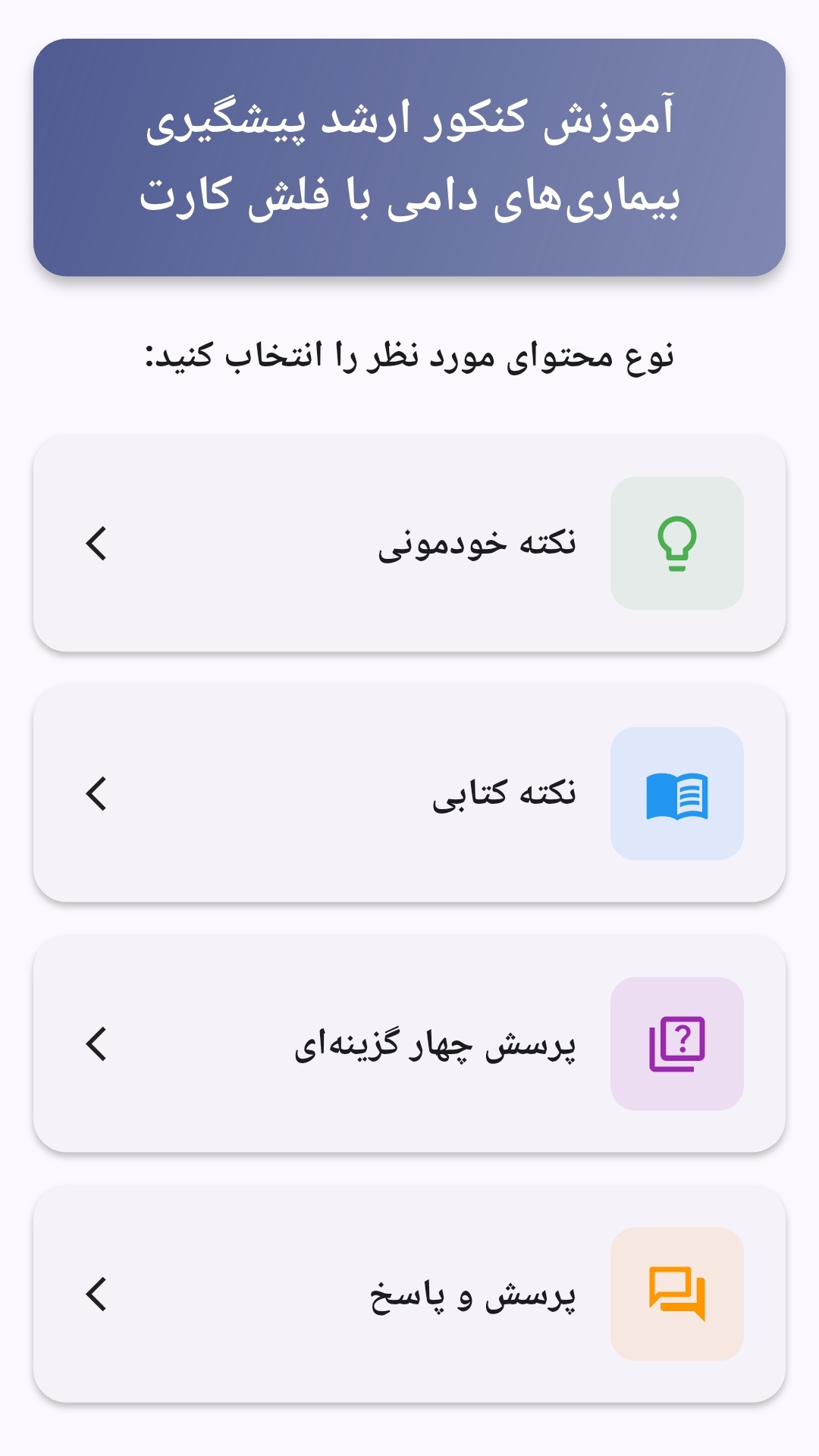
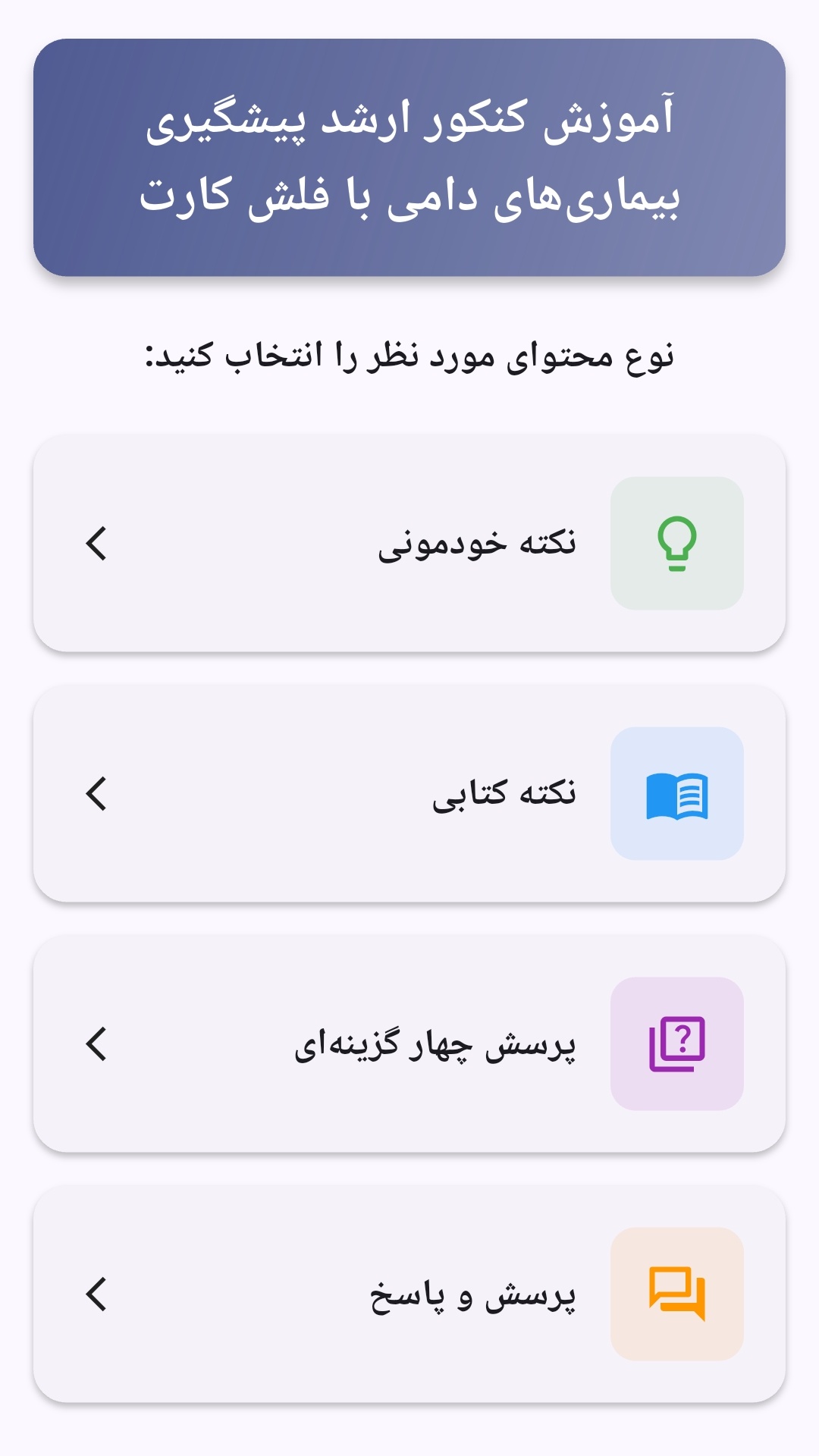
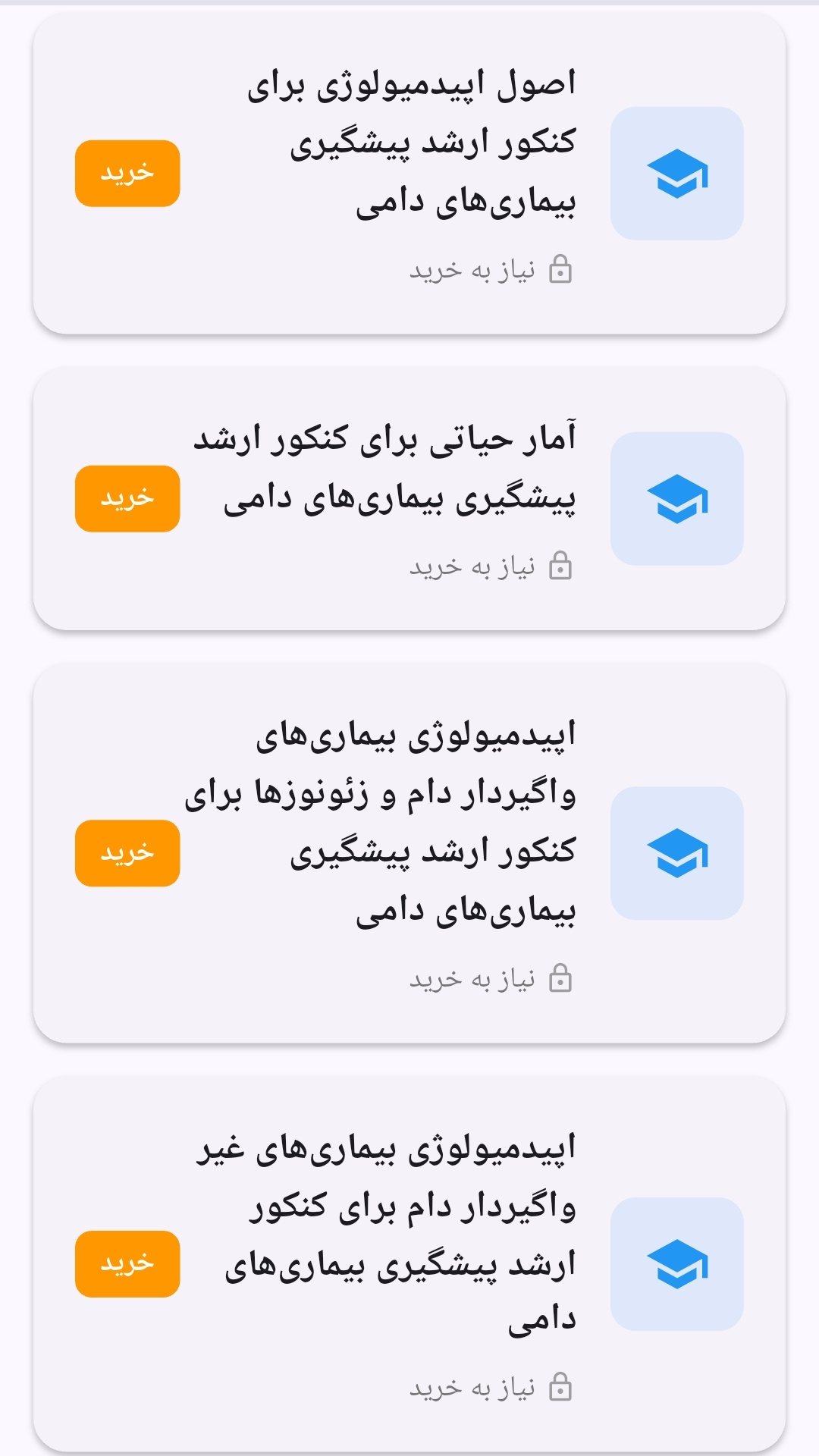
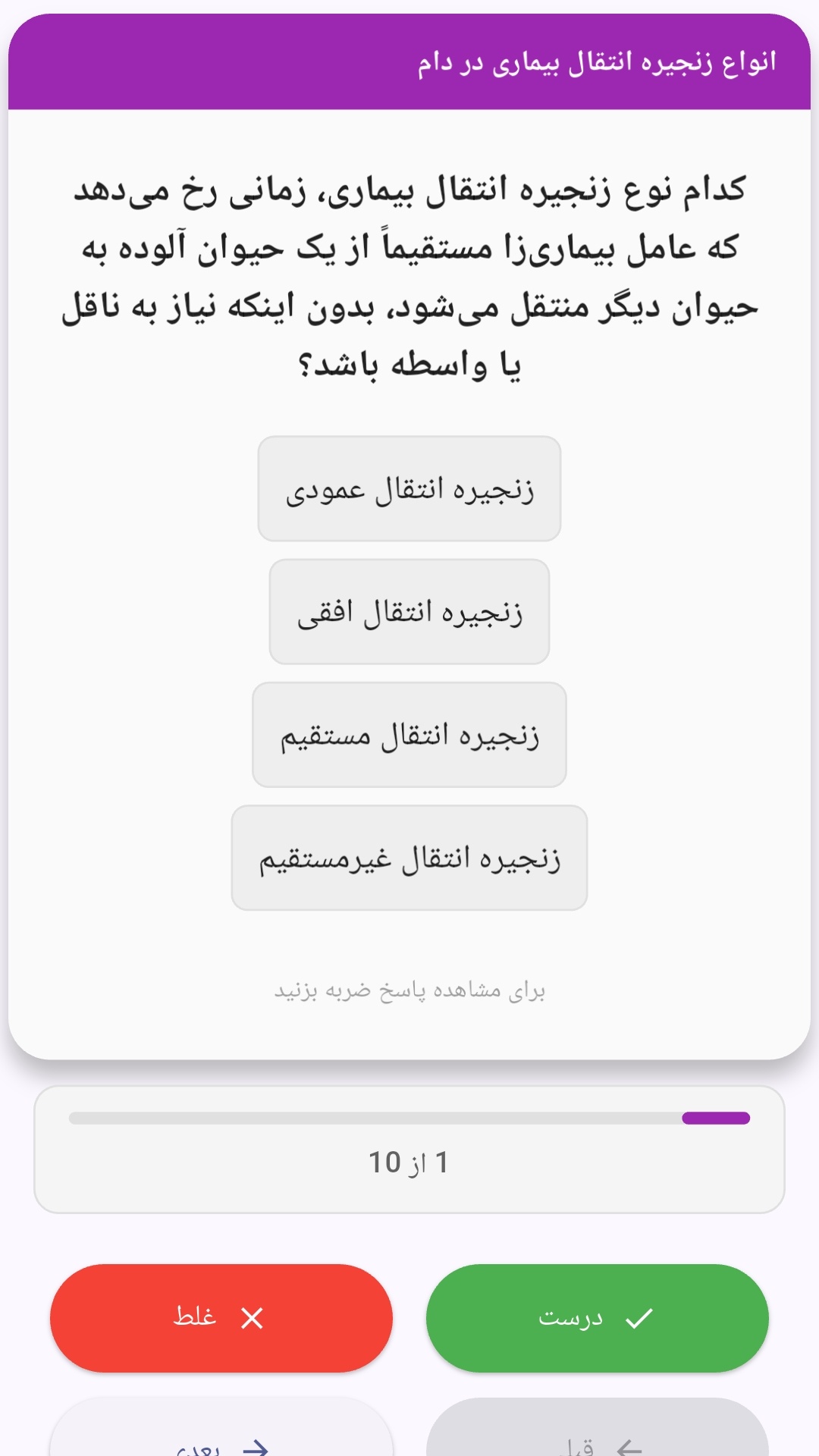
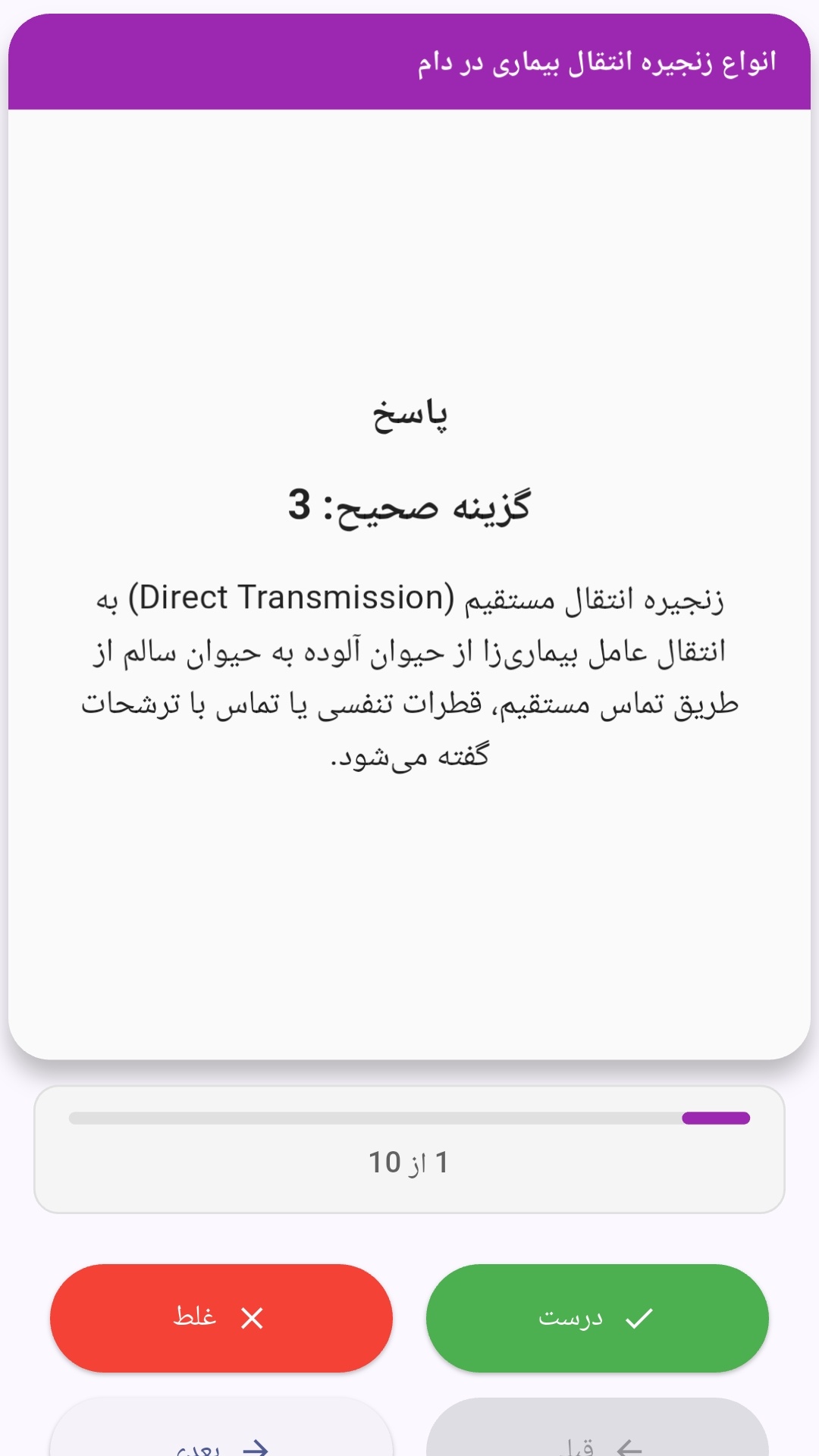
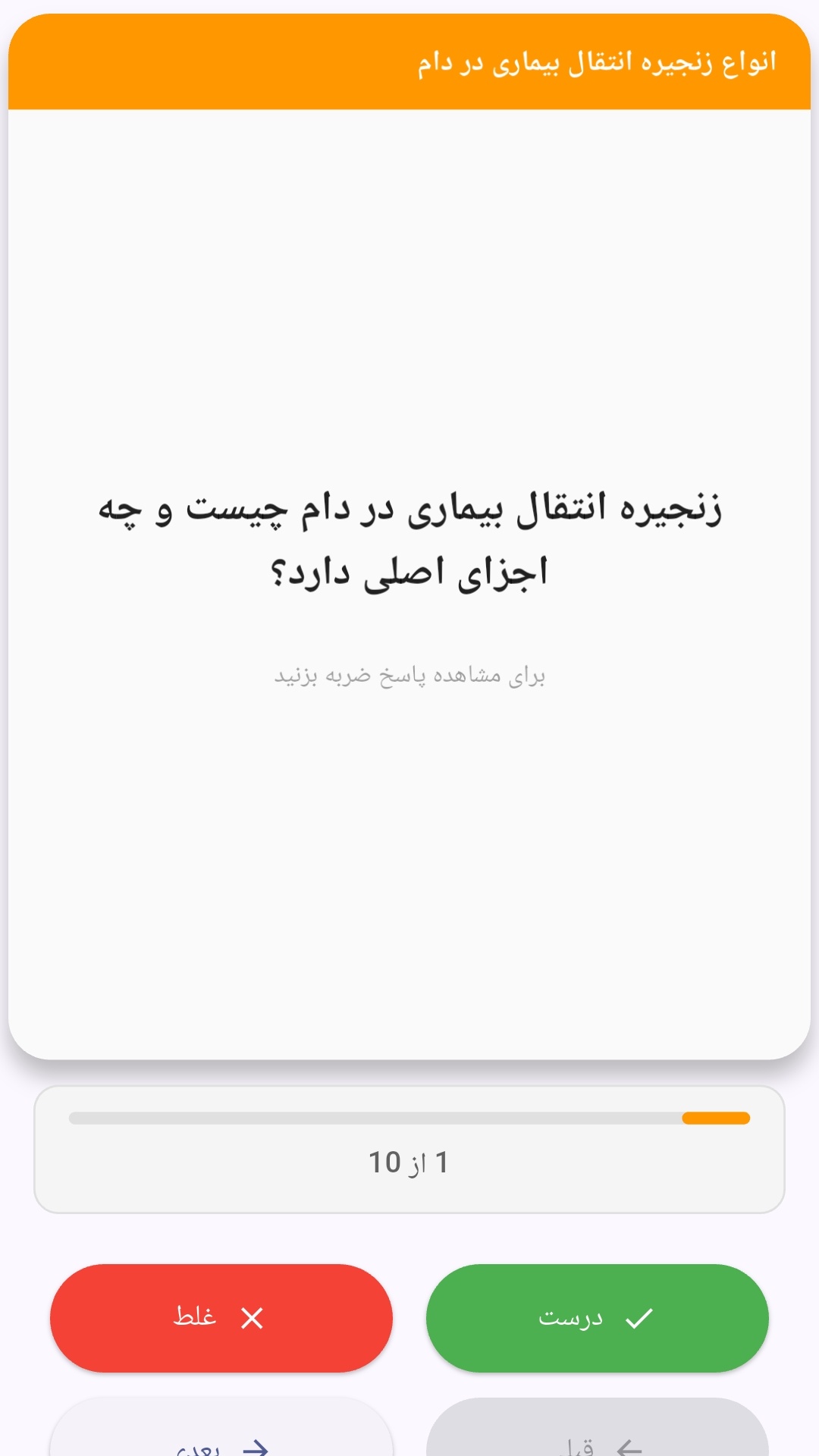
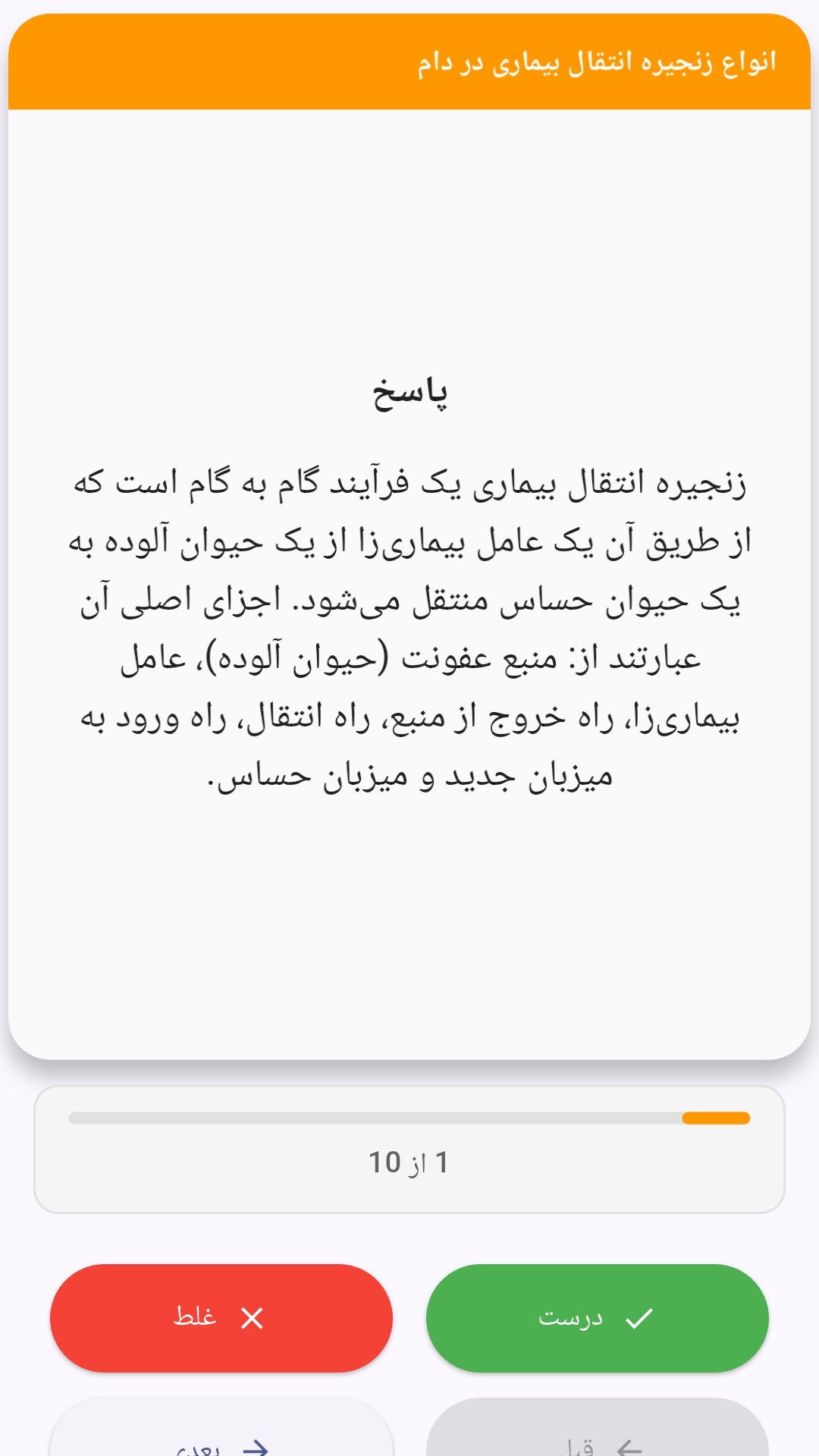
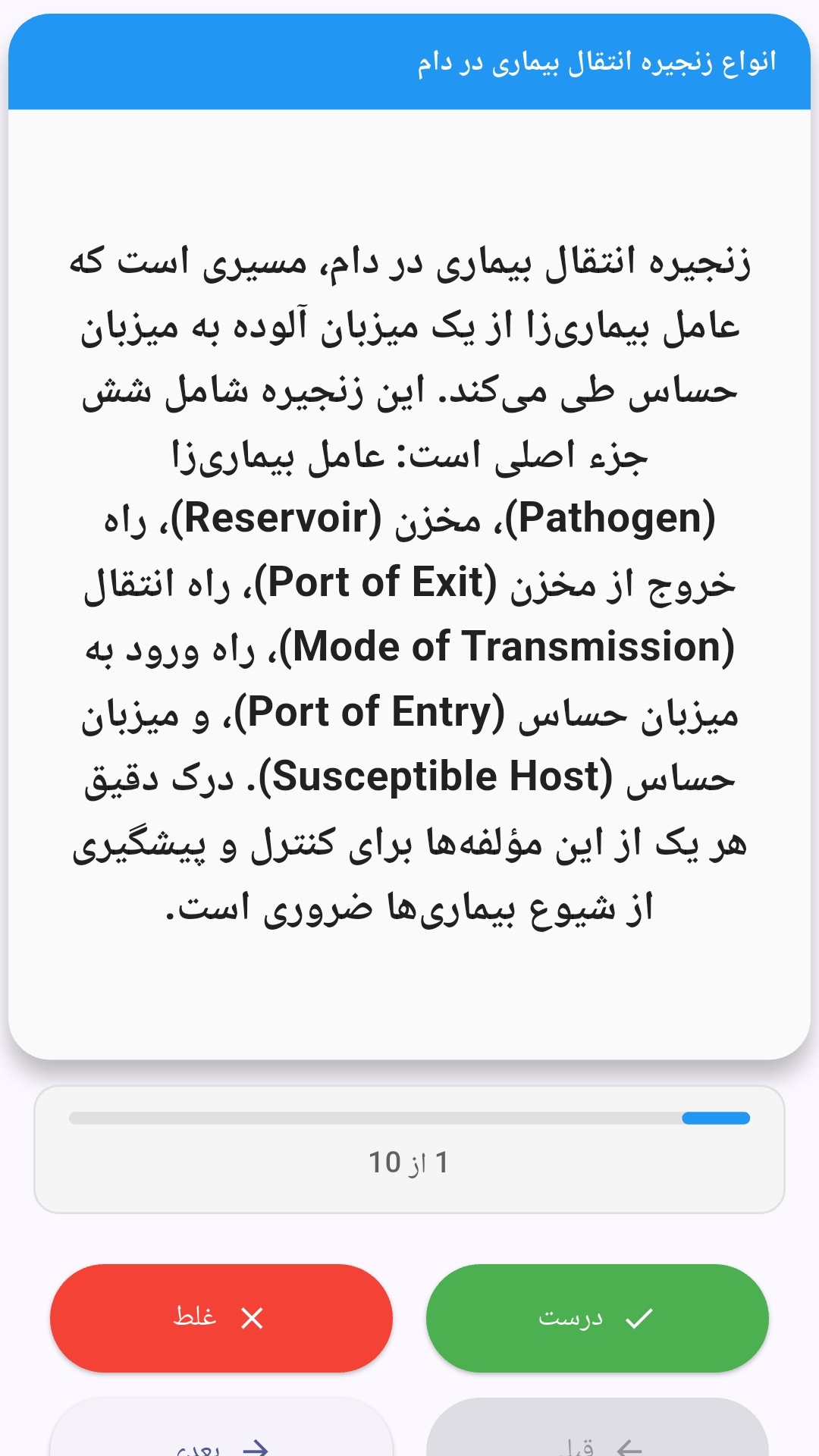
این اپلیکیشن فارسی برای یادگیری و مرور محتوای آموزشی از طریق فلشکارت طراحی شده است. کارتها را یکییکی مرور کنید، پاسخ پرسشها را به یاد بیاورید و نتیجه هر پاسخ را ثبت کنید. محتوای دوره پس از نصب درون برنامه در دسترس است تا برای مطالعه روزمره معمولاً به اتصال مداوم اینترنت نیاز نداشته باشید.
محتوای آموزشی در قالبهای متنوع ارائه میشود تا هم برای یادگیری مفاهیم جدید و هم برای تثبیت آموختهها قابل استفاده باشد.
- رابط کاربری فارسی و راستچین با فونت وزیر.
- تم روشن و تیره مطابق تنظیمات سیستم.
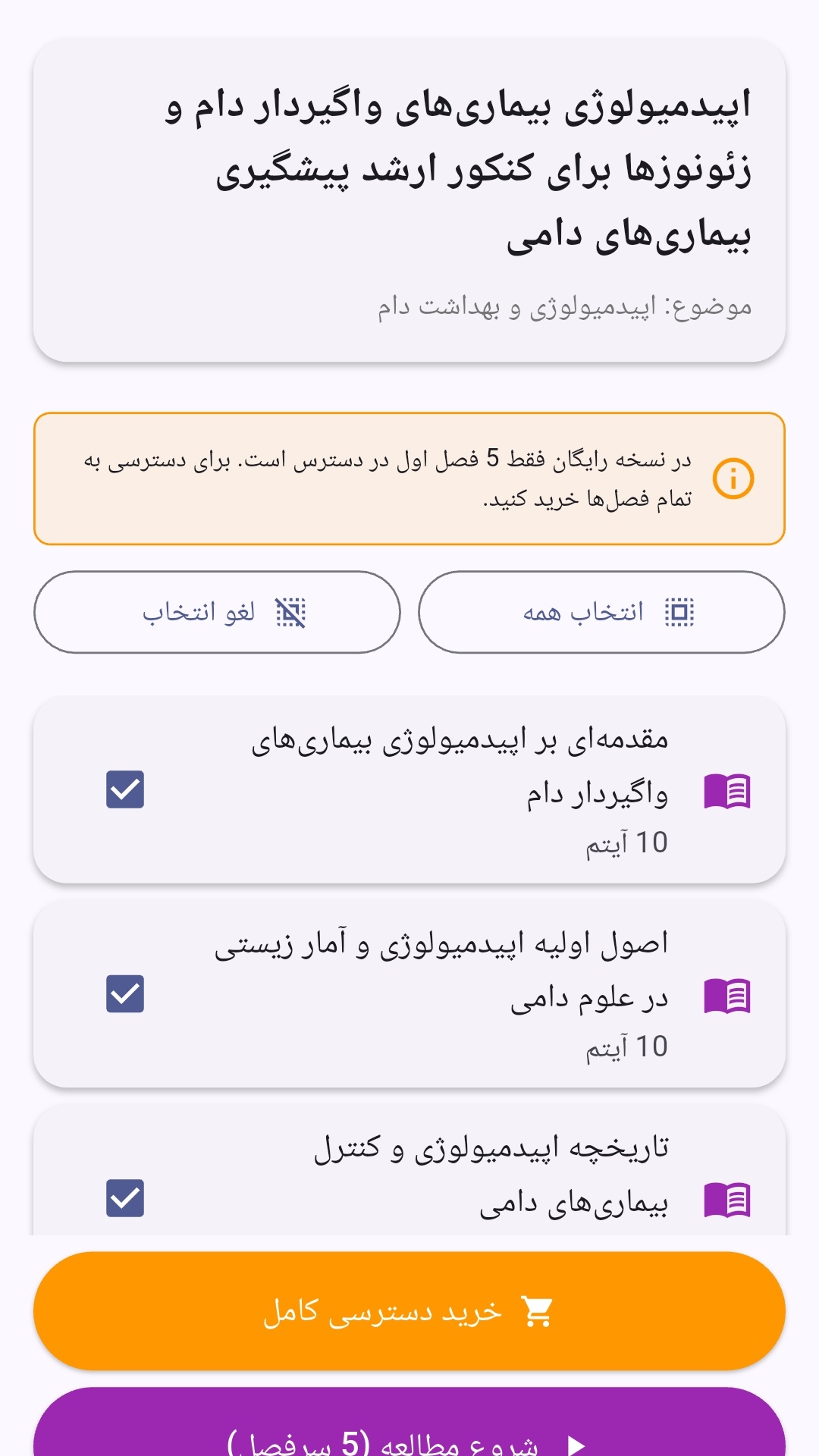
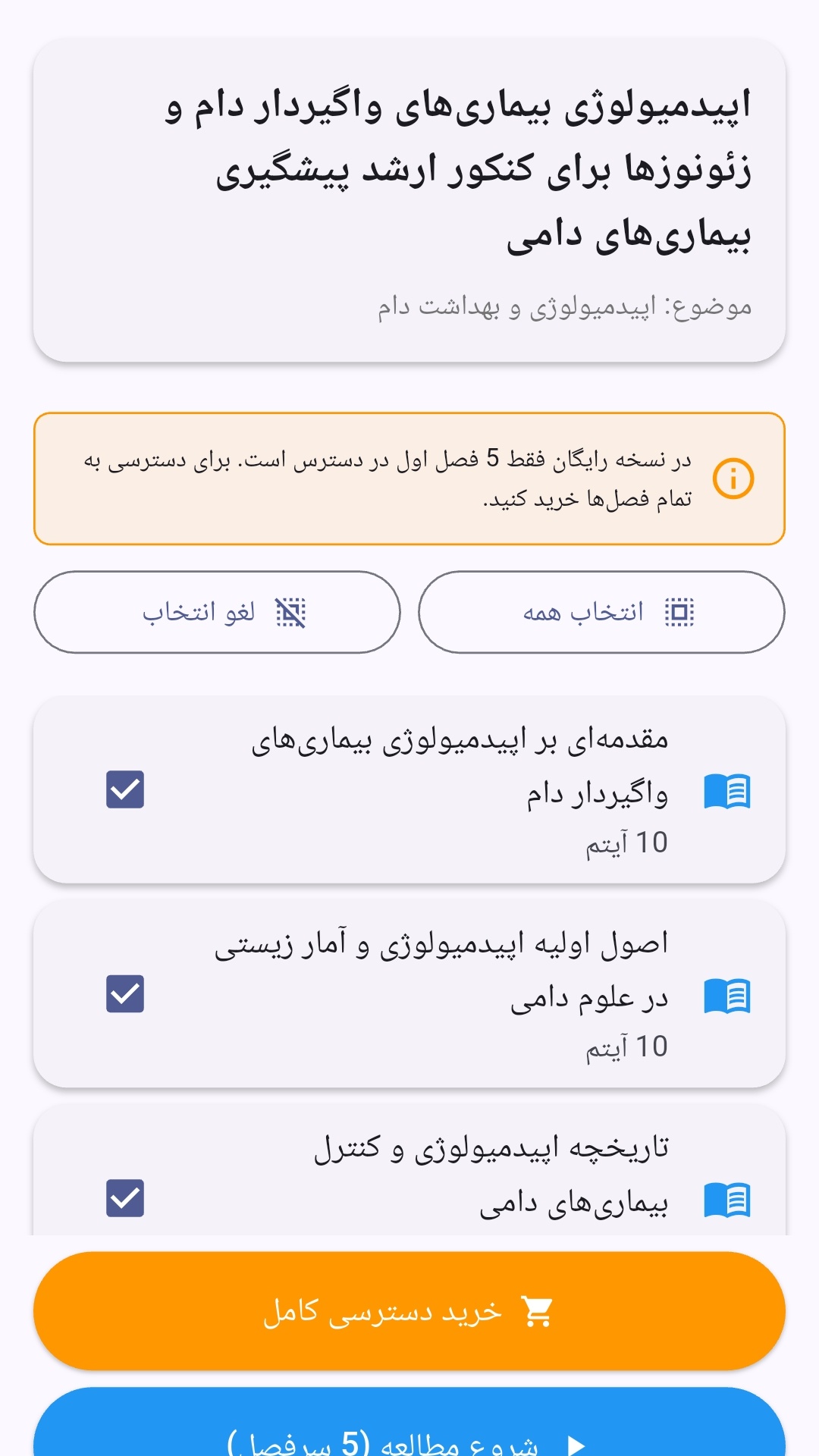
- صفحهبندی ساده برای انتخاب دوره و شروع مرور.
- نمایش تعداد دفعات مرور هر فصل.
- انتخاب چند فصل برای مرور همزمان.
- امکان تمرکز بر فصلهایی که هنوز مرور نشدهاند.
این اپلیکیشن برای دانشآموزان، دانشجویان، داوطلبان آزمونها و علاقهمندان به یادگیری طراحی شده است؛ بهویژه کسانی که میخواهند مطالب آموزشی را در زمانهای کوتاه مرور کنند، دانستههای خود را بسنجند و مطالعه منظمتری داشته باشند.
نظرات
هنوز نظری ثبت نشده است.
وارد شوید تا نظر ثبت کنید.