
اپلیکیشن اندرویدی فلشکارت آموزشی انگلیسی برای مراقبت از مردم
📚 کتاب آموزشی جامع
📚 اطلاعات کتاب
عنوان کتاب: کتاب انگلیسی برای مراقبت از مردم
موضوع کلی: آموزش زبانهای خارجی
موضوع میانی: زبان در حوزه پزشکی
📋 سرفصلهای کتاب (100 موضوع)
- 1. Introduction to English for Patient Care
- 2. Basic Greetings and Introductions in Healthcare
- 3. Understanding Roles in a Medical Team
- 4. Navigating the Hospital Environment: Departments & Facilities
- 5. Essential Medical Terminology: Prefixes, Suffixes, Roots
- 6. Numbers, Dates, and Times in a Clinical Setting
- 7. Taking Personal Information: Demographics and Contact
- 8. Common Questions and Responses in Patient Registration
- 9. Head and Neck: Identifying Structures and Conditions
- 10. The Chest and Back: Key Anatomy and Related Terms
- 11. Upper Limbs: Arms, Hands, and Associated Issues
- 12. Lower Limbs: Legs, Feet, and Mobility Concerns
- 13. The Skeletal System: Bones, Joints, and Injuries
- 14. The Muscular System: Muscles, Movement, and Pain
- 15. The Cardiovascular System: Heart, Blood, and Circulation
- 16. The Respiratory System: Lungs, Breathing, and Airway
- 17. The Digestive System: Organs of Digestion and Elimination
- 18. The Nervous System: Brain, Nerves, and Senses
- 19. The Urinary System: Kidneys, Bladder, and Excretion
- 20. The Endocrine System: Glands and Hormonal Balance
- 21. The Reproductive System: Male and Female Anatomy
- 22. The Integumentary System: Skin, Hair, and Nails
- 23. Taking a Comprehensive Medical History: An Overview
- 24. Eliciting the Chief Complaint: "What brings you in today?"
- 25. History of Present Illness (HPI): Onset, Location, Duration, Character
- 26. Describing Pain: Severity, Quality, Radiation, Relieving Factors
- 27. Asking About Associated Symptoms
- 28. Review of Systems (ROS): General Symptoms (Fever, Fatigue, Weight Loss)
- 29. Review of Systems (ROS): Respiratory Symptoms
- 30. Review of Systems (ROS): Cardiovascular Symptoms
- 31. Review of Systems (ROS): Gastrointestinal Symptoms
- 32. Review of Systems (ROS): Neurological Symptoms
- 33. Review of Systems (ROS): Musculoskeletal Symptoms
- 34. Review of Systems (ROS): Genitourinary Symptoms
- 35. Past Medical History (PMH): Chronic Conditions and Hospitalizations
- 36. Surgical History: Previous Surgeries and Outcomes
- 37. Medication History: Current and Past Medications, Doses
- 38. Allergy History: Known Allergies and Reactions
- 39. Family Medical History: Hereditary Conditions
- 40. Social History: Occupation, Habits, Lifestyle
- 41. Obtaining Informed Consent: Explaining Procedures and Risks
- 42. Performing Vital Signs: Temperature, Pulse, Respiration, Blood Pressure
- 43. Communicating About Physical Examination Findings: General Appearance
- 44. Communicating About Physical Examination Findings: HEENT (Head, Eyes, Ears, Nose, Throat)
- 45. Communicating About Physical Examination Findings: Chest and Lungs Auscultation
- 46. Communicating About Physical Examination Findings: Cardiovascular Auscultation
- 47. Communicating About Physical Examination Findings: Abdominal Palpation and Auscultation
- 48. Communicating About Physical Examination Findings: Musculoskeletal Assessment
- 49. Communicating About Physical Examination Findings: Neurological Assessment
- 50. Mental Status Examination: Basics of Communication
- 51. Describing Common Colds and Flu Symptoms
- 52. Communicating About Respiratory Conditions: Asthma, COPD
- 53. Discussing Cardiovascular Diseases: Hypertension, Heart Failure
- 54. Explaining Diabetes Mellitus: Types and Management
- 55. Communicating About Gastrointestinal Disorders: Nausea, Diarrhea, Constipation
- 56. Describing Skin Conditions: Rashes, Eczema, Psoriasis
- 57. Discussing Musculoskeletal Injuries: Fractures, Sprains, Arthritis
- 58. Communicating About Infectious Diseases: Prevention and Treatment
- 59. Explaining Urinary Tract Infections (UTIs)
- 60. Describing Neurological Symptoms: Headaches, Dizziness, Numbness
- 61. Communicating About Mental Health Concerns: Anxiety, Depression
- 62. Preparing Patients for Blood Tests and Lab Work
- 63. Explaining X-Rays and Basic Imaging Procedures
- 64. Discussing Advanced Imaging: CT Scans, MRIs, Ultrasounds
- 65. Interpreting and Explaining Lab Results to Patients
- 66. Explaining Medication Regimens: Dosage, Frequency, Side Effects
- 67. Administering Oral and Topical Medications: Instructions
- 68. Communicating About Injections and Vaccinations
- 69. Wound Care: Cleaning, Dressing Changes, Infection Signs
- 70. Pre-Operative Instructions: What to Expect Before Surgery
- 71. Post-Operative Care: Recovery, Pain Management, Follow-up
- 72. Explaining Surgical Procedures: Benefits and Risks
- 73. IV Therapy and Blood Transfusions: Communication Points
- 74. Physical Therapy and Rehabilitation: Goals and Exercises
- 75. Dietary Advice and Nutritional Guidelines
- 76. Pain Management Strategies and Communication
- 77. Explaining Lifestyle Modifications for Health
- 78. Patient Education: Empowering Self-Care and Prevention
- 79. Responding to Medical Emergencies: Initial Communication
- 80. Describing Symptoms in Acute Care Settings
- 81. Basic Life Support (BLS) and CPR Communication
- 82. Communicating During Triage and Prioritization
- 83. Explaining Emergency Procedures to Patients and Families
- 84. Handling Critical Situations: Clear and Calm Communication
- 85. Pediatric Care: Communicating with Children and Parents
- 86. Geriatric Care: Addressing Needs of Older Adults
- 87. Obstetrics and Gynecology: Pregnancy, Childbirth, Women's Health
- 88. Mental Health: Providing Empathetic Support
- 89. Communicating with Patients with Disabilities
- 90. End-of-Life Care and Palliative Care: Sensitive Communication
- 91. Giving Clear and Concise Instructions to Patients
- 92. Active Listening and Showing Empathy
- 93. Delivering Bad News with Compassion
- 94. Dealing with Difficult Patients and Families
- 95. Cultural Competence in Healthcare Communication
- 96. Discussing Patient Confidentiality and Rights
- 97. Handover and Reporting: SBAR Communication
- 98. Referring Patients to Specialists: Clear Communication
- 99. Basic Medical Charting and Documentation
- 100. Professional Consultations and Inter-Staff Communication
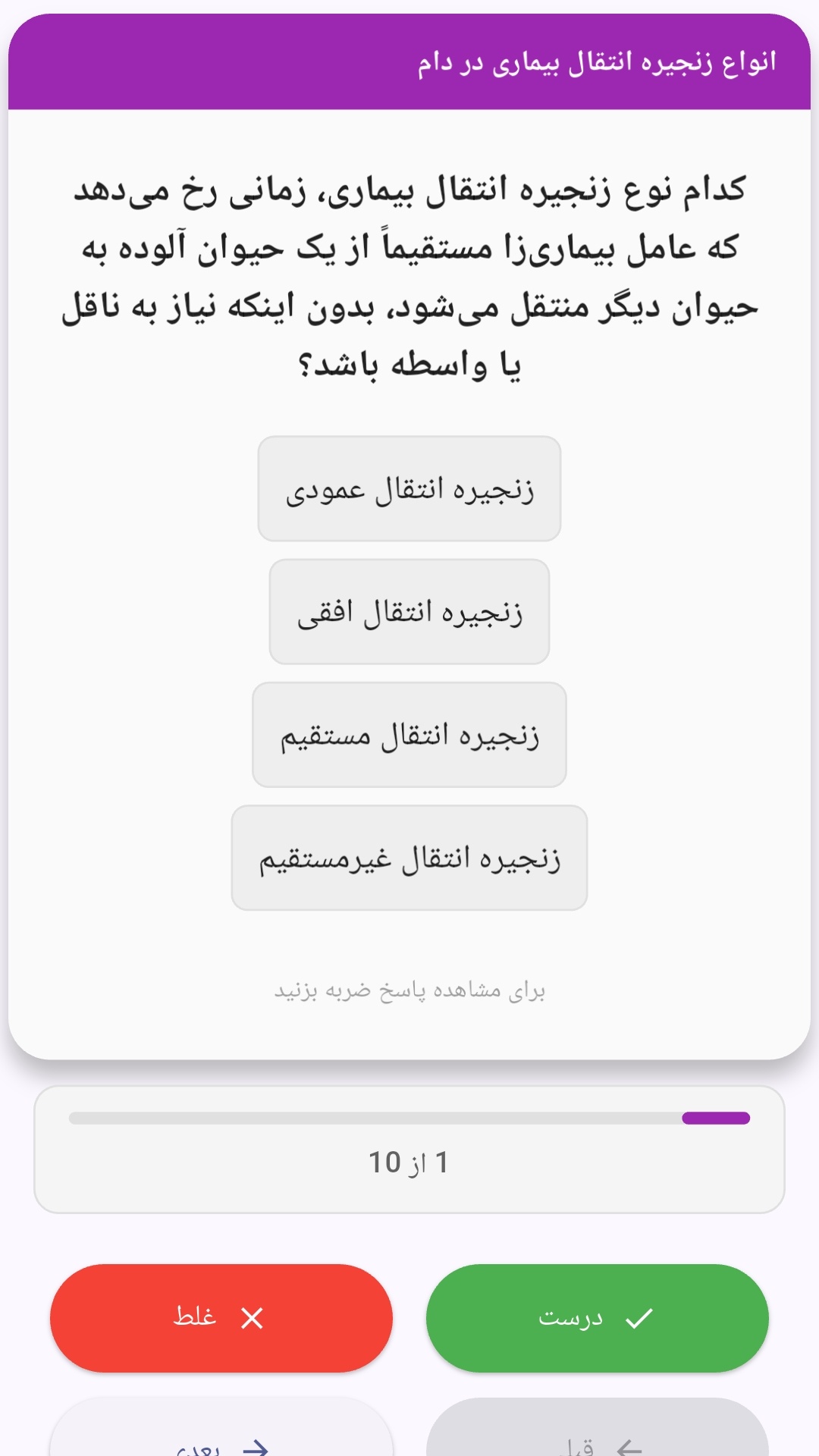
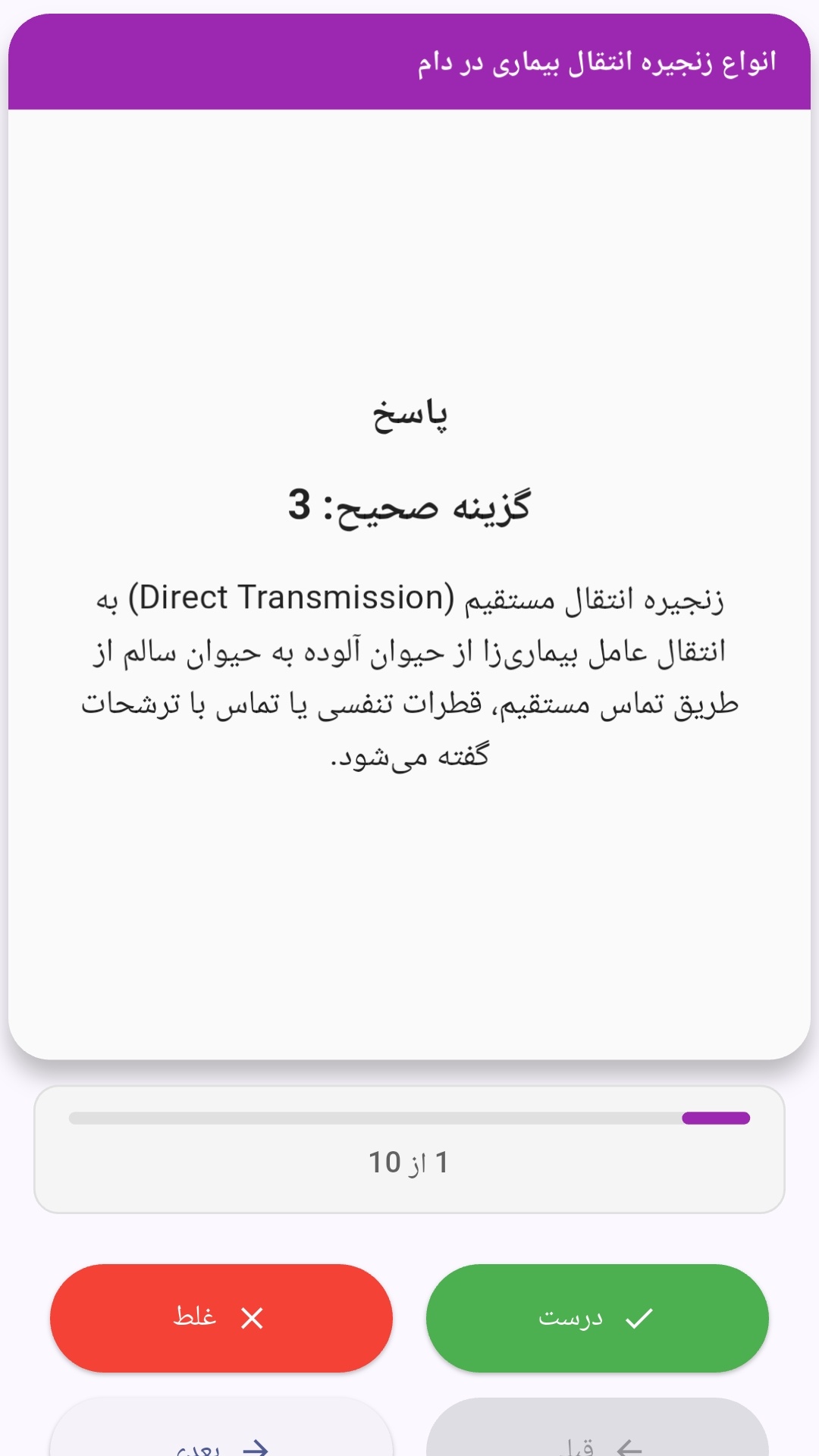
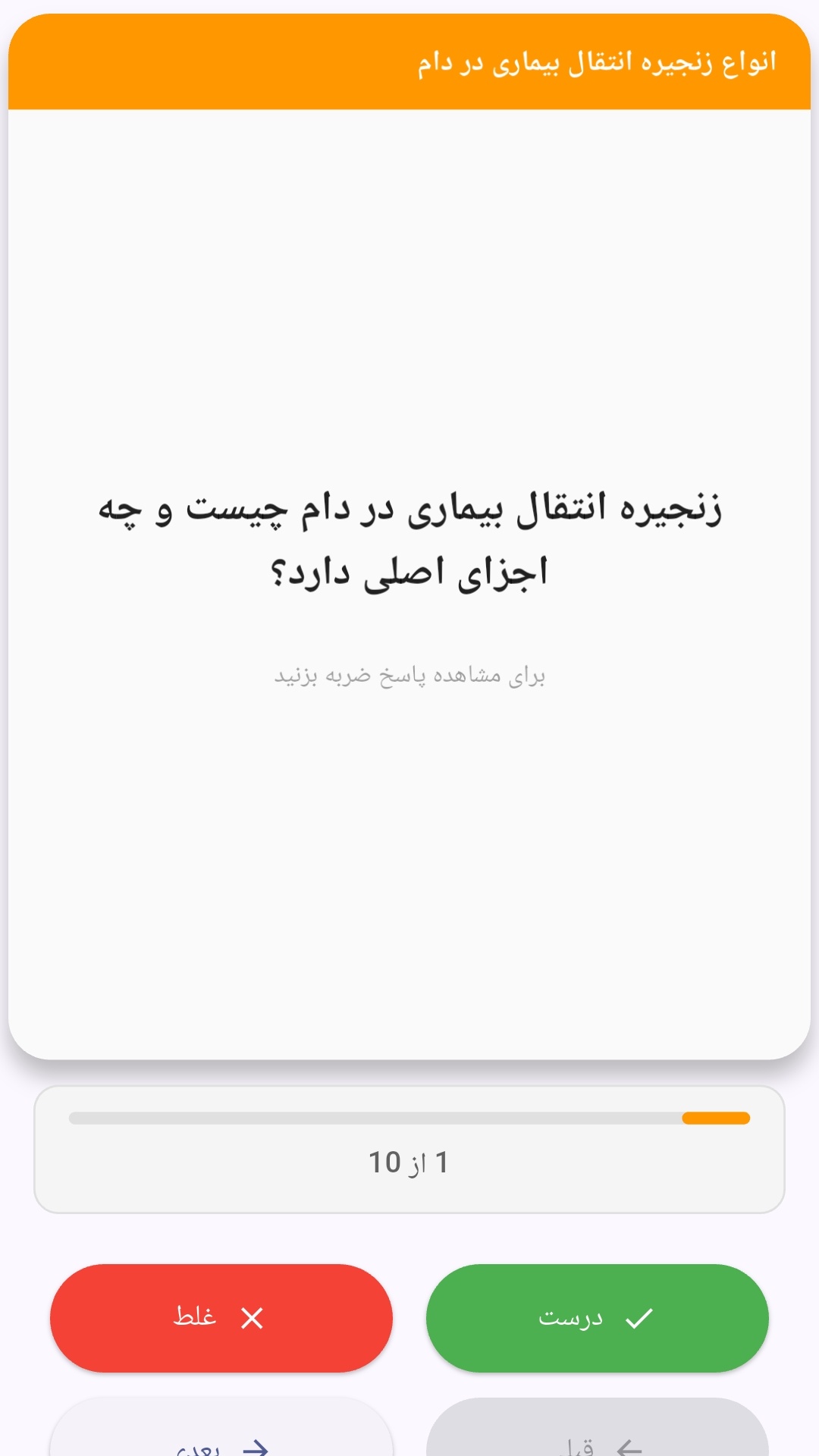
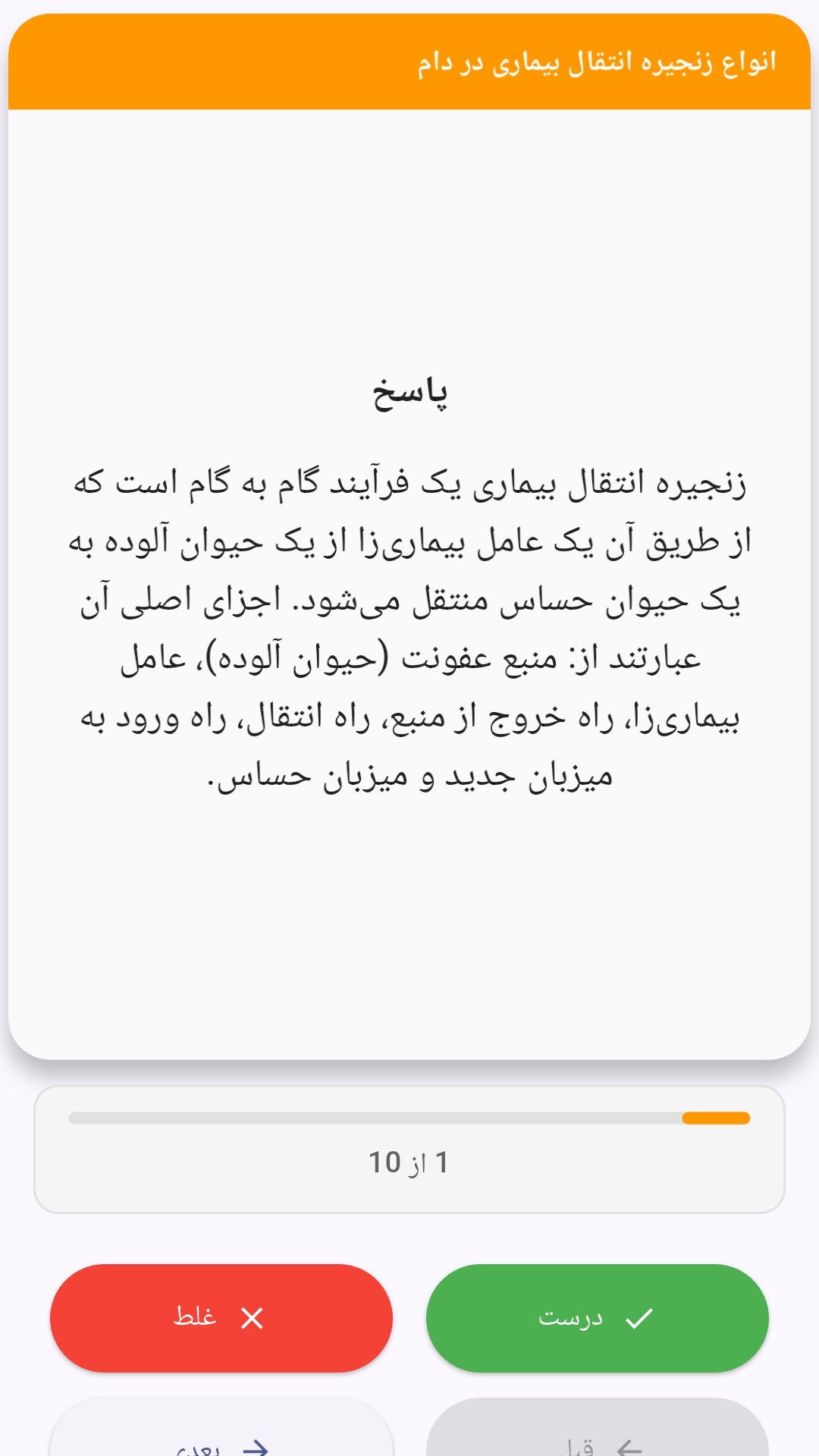
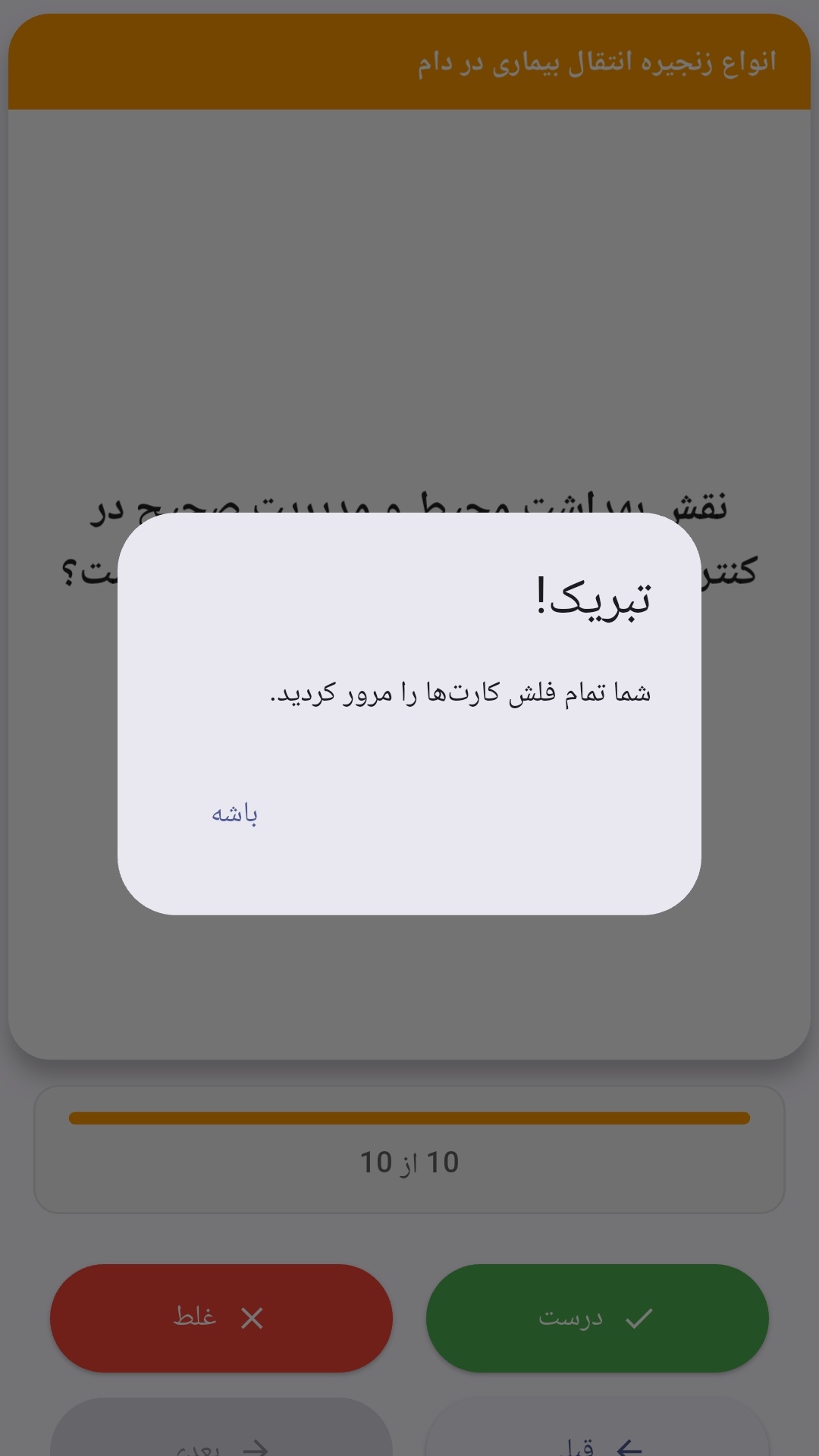
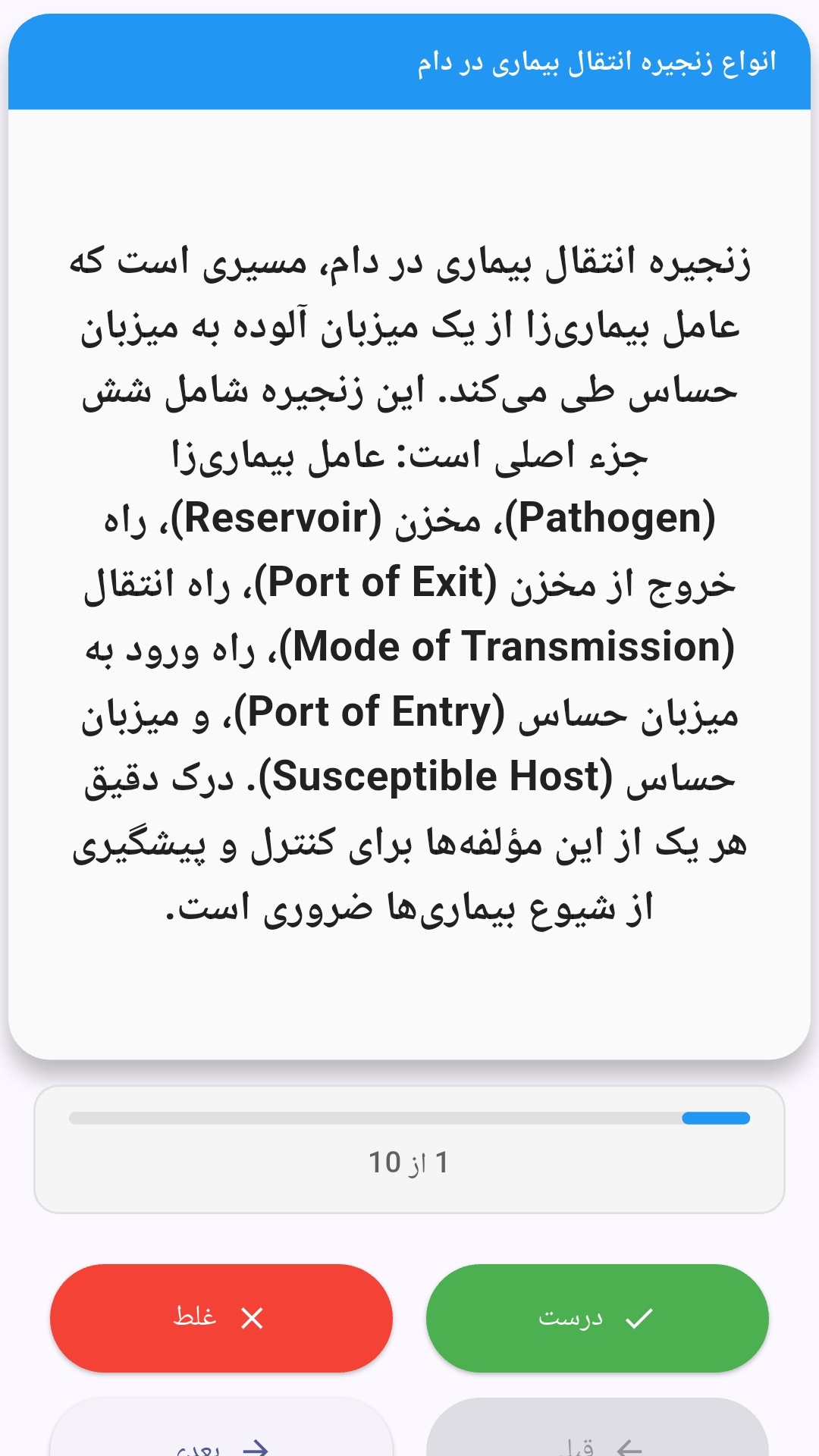
این اپلیکیشن فارسی برای یادگیری و مرور محتوای آموزشی از طریق فلشکارت طراحی شده است. کارتها را یکییکی مرور کنید، پاسخ پرسشها را به یاد بیاورید و نتیجه هر پاسخ را ثبت کنید. محتوای دوره پس از نصب درون برنامه در دسترس است تا برای مطالعه روزمره معمولاً به اتصال مداوم اینترنت نیاز نداشته باشید.
محتوای آموزشی در قالبهای متنوع ارائه میشود تا هم برای یادگیری مفاهیم جدید و هم برای تثبیت آموختهها قابل استفاده باشد.
- رابط کاربری فارسی و راستچین با فونت وزیر.
- تم روشن و تیره مطابق تنظیمات سیستم.
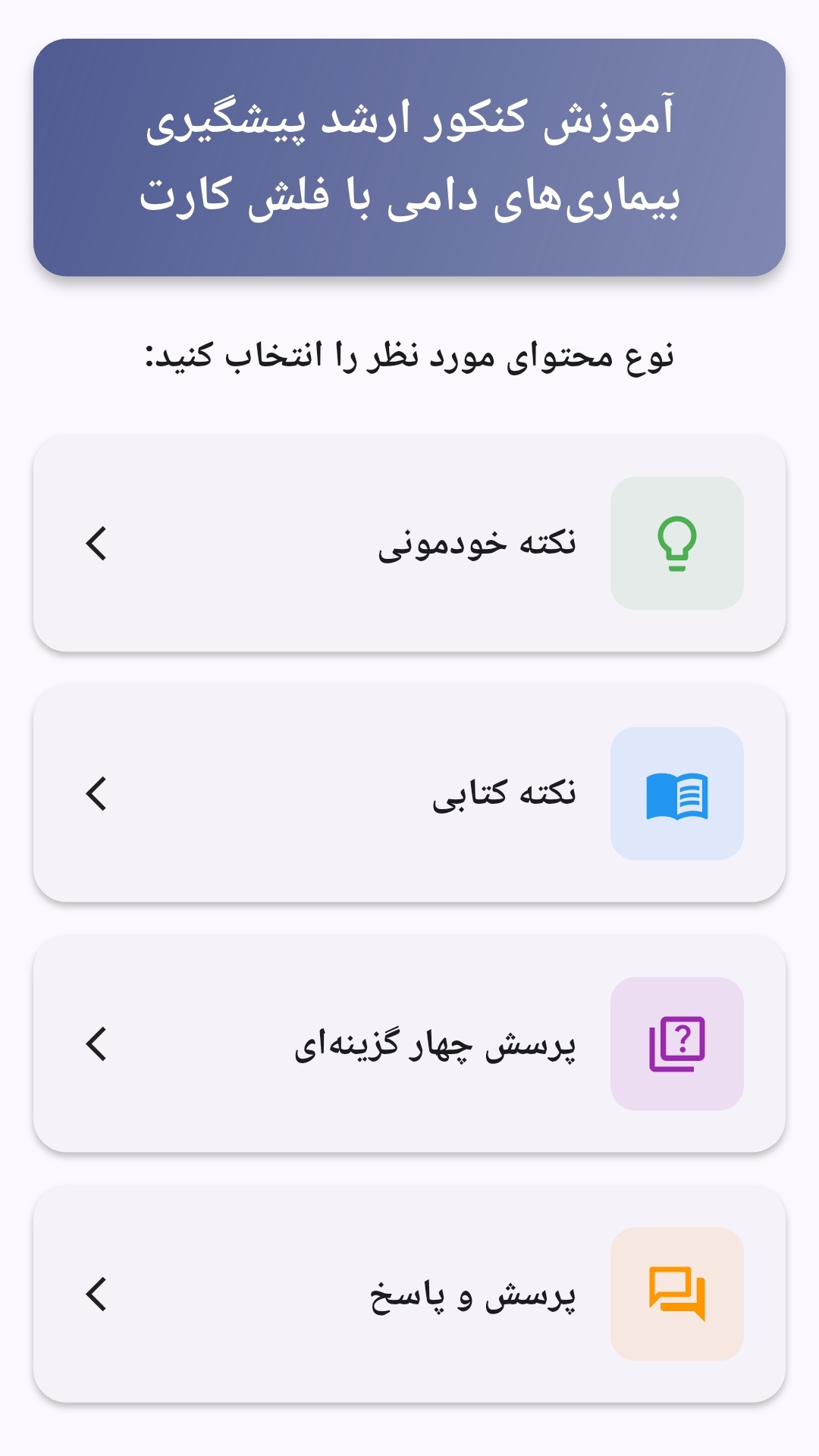
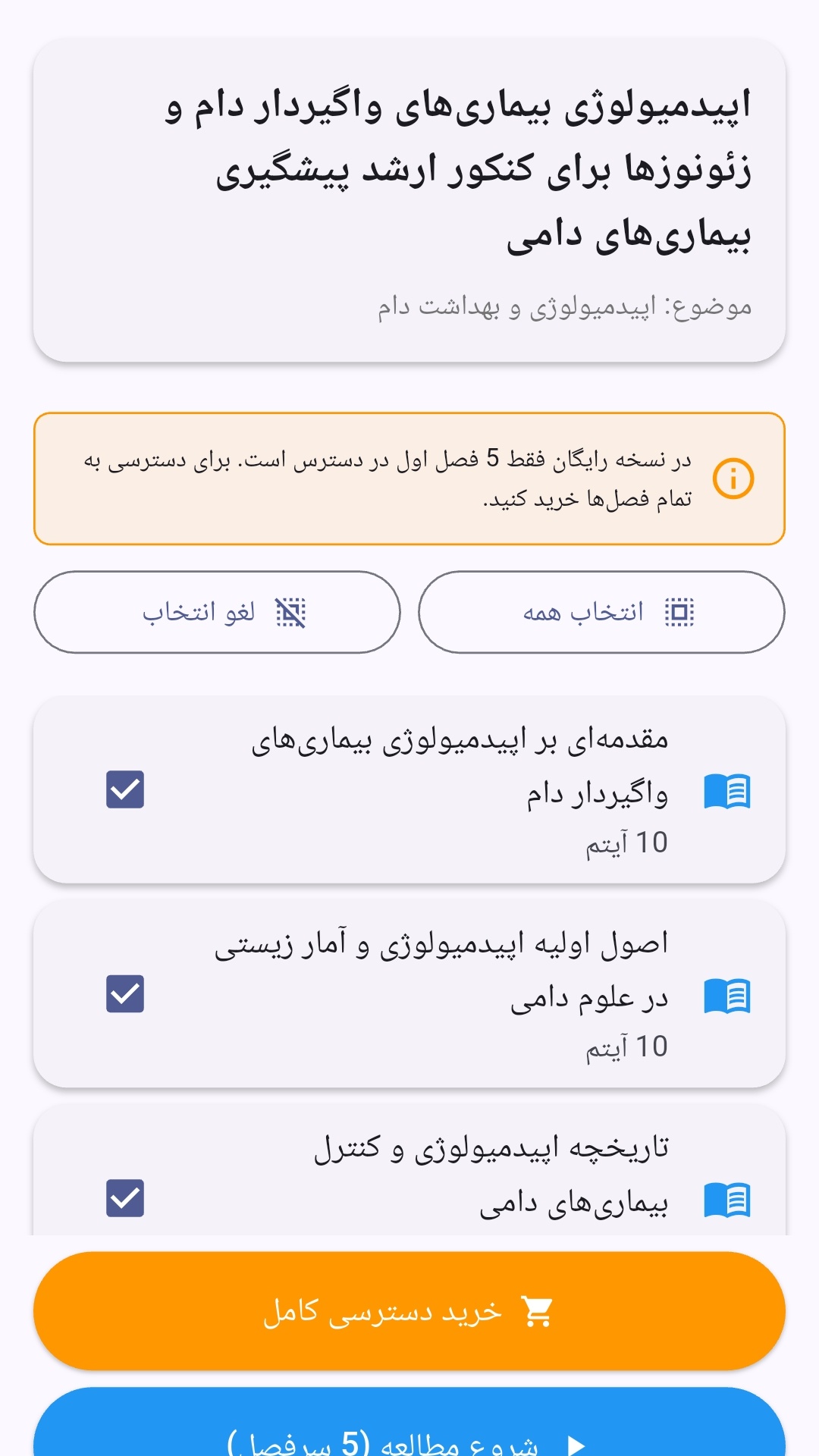
- صفحهبندی ساده برای انتخاب دوره و شروع مرور.
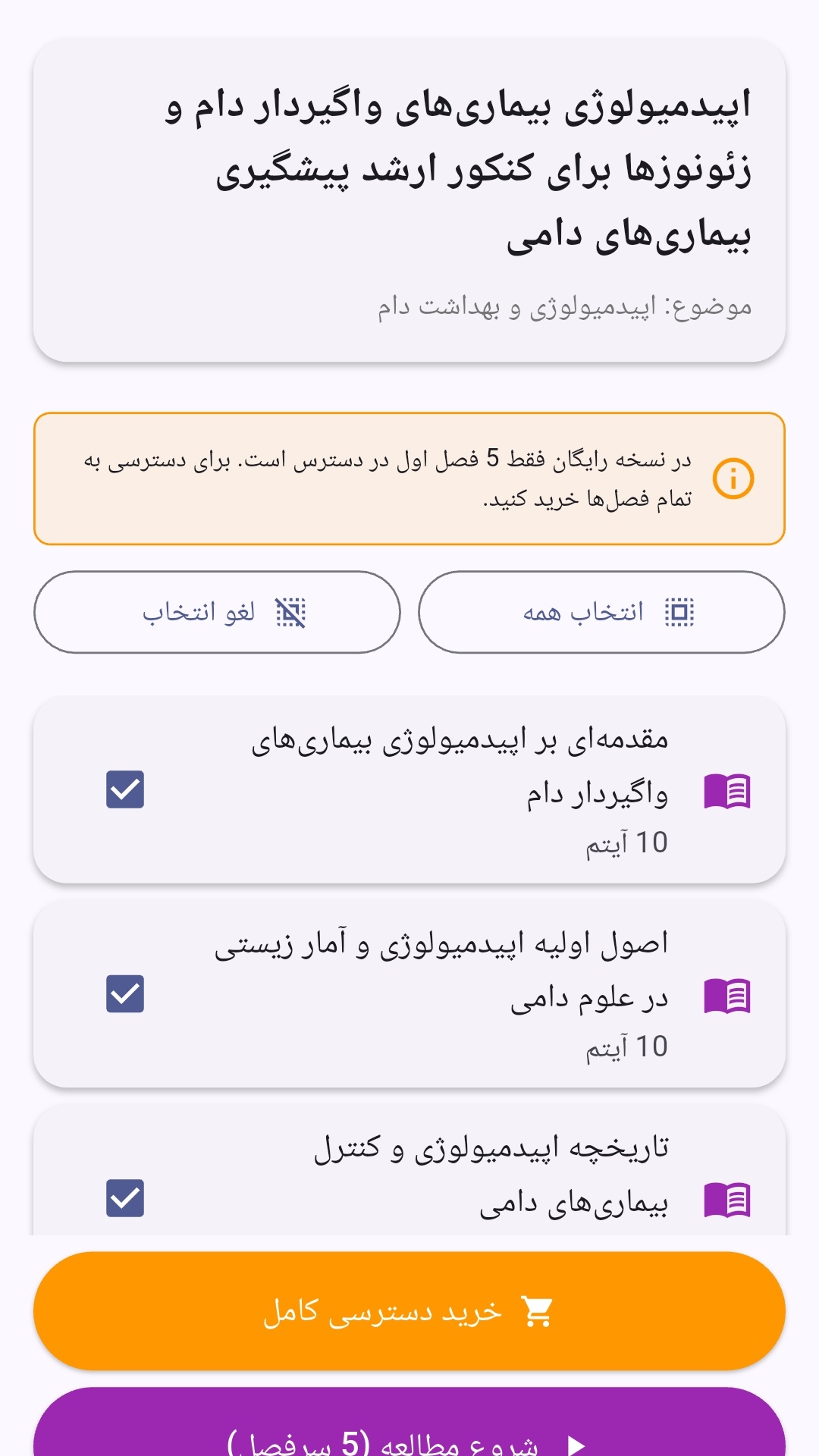
- نمایش تعداد دفعات مرور هر فصل.
- انتخاب چند فصل برای مرور همزمان.
- امکان تمرکز بر فصلهایی که هنوز مرور نشدهاند.
این اپلیکیشن برای دانشآموزان، دانشجویان، داوطلبان آزمونها و علاقهمندان به یادگیری طراحی شده است؛ بهویژه کسانی که میخواهند مطالب آموزشی را در زمانهای کوتاه مرور کنند، دانستههای خود را بسنجند و مطالعه منظمتری داشته باشند.

نظرات
هنوز نظری ثبت نشده است.
وارد شوید تا نظر ثبت کنید.