اپلیکیشن اندرویدی فلشکارت آموزشی زبان تخصصی سمشناسی: اصطلاحات و مبانی علمی به انگلیسی
📚 کتاب آموزشی جامع
📚 اطلاعات کتاب
عنوان کتاب: کتاب زبان تخصصی سمشناسی: اصطلاحات و مبانی علمی به انگلیسی
موضوع کلی: آموزش زبانهای خارجی
موضوع میانی: زبان در حوزه پزشکی
📋 سرفصلهای کتاب (100 موضوع)
- 1. Introduction to Specialized English in Medicine
- 2. Understanding Medical Prefixes and Suffixes
- 3. Common Latin and Greek Roots in Medical Terminology
- 4. Strategies for Mastering Medical Vocabulary
- 5. Decoding Medical Abbreviations and Acronyms
- 6. Navigating Scientific Article Structure in English
- 7. Effective Reading Techniques for Medical Texts
- 8. Building Medical Lexicon: Etymology and Mnemonics
- 9. Pronunciation Guide for Complex Medical Terms
- 10. Essential Grammar for Scientific and Medical Writing
- 11. Defining Toxicology: Scope and Sub-Disciplines
- 12. Historical Milestones in Toxicology (English Terms)
- 13. The Dose-Response Relationship: Key Terminology
- 14. Acute vs. Chronic Toxicity: Distinguishing Terms
- 15. Routes of Exposure: Oral, Dermal, Inhalation Vocabulary
- 16. Factors Modifying Toxic Response: Age, Genetics, Diet
- 17. Classification of Toxic Agents (Overview)
- 18. Understanding Lethal Doses (LD50, LC50) Terminology
- 19. Hazard vs. Risk Assessment: Core Concepts and Terms
- 20. Basic Principles of Poisoning Mechanisms
- 21. Environmental Toxicology: Key Concepts
- 22. Forensic Toxicology: Definitions and Applications
- 23. Clinical Toxicology: An Introduction
- 24. Occupational Toxicology: Essential Vocabulary
- 25. Regulatory Toxicology: Framework and Terms
- 26. Introduction to Toxicokinetics: ADME Principles
- 27. Absorption of Toxicants: Mechanisms and Terminology
- 28. Distribution of Toxicants: Organs and Barriers
- 29. Biotransformation (Metabolism) Phase I Reactions
- 30. Biotransformation (Metabolism) Phase II Reactions
- 31. Excretion of Toxicants: Renal, Biliary, Other Routes
- 32. First-Pass Metabolism and Its Significance
- 33. Bioavailability and Systemic Exposure Terminology
- 34. Introduction to Toxicodynamics: Target Organ Effects
- 35. Receptor-Mediated Toxicity: Concepts and Examples
- 36. Non-Receptor Mediated Toxicity Pathways
- 37. Cellular Mechanisms of Toxicity: Apoptosis, Necrosis
- 38. Oxidative Stress and Free Radical Damage
- 39. Immune System Toxicity (Immunotoxicity)
- 40. Neurotoxicity: Effects on the Nervous System
- 41. Heavy Metal Toxicity: Lead, Mercury, Arsenic Terminology
- 42. Pesticides Classification and Their Mechanisms
- 43. Organophosphate and Carbamate Insecticides
- 44. Herbicides: Paraquat and Glyphosate Effects
- 45. Solvents Toxicity: Benzene, Toluene, Xylene
- 46. Alcohols and Glycols: Methanol, Ethylene Glycol Poisoning
- 47. Common Toxic Gases: Carbon Monoxide, Cyanide, Hydrogen Sulfide
- 48. Corrosives and Irritants: Acids and Bases
- 49. Drug Overdose: Opioids, Acetaminophen, Benzodiazepines
- 50. Cardiac Glycosides and Their Toxic Effects
- 51. Anticoagulant Rodenticides: Warfarin-like Compounds
- 52. Plant Toxins: Alkaloids, Glycosides (e.g., Digitalis)
- 53. Animal Toxins: Snake Venoms, Insect Stings
- 54. Mycotoxins: Aflatoxins, Ergot Alkaloids
- 55. Bacterial Toxins: Botulinum Toxin, Tetanus Toxin
- 56. Food Additives and Contaminants Toxicology
- 57. Environmental Pollutants: Dioxins, PCBs
- 58. Air Pollutants: Particulate Matter, Ozone, NOx
- 59. Water Pollutants: Heavy Metals, Pesticides in Water
- 60. Nanomaterial Toxicity: Terminology and Concerns
- 61. Radiation Toxicology: Ionizing and Non-ionizing Radiation
- 62. Endocrine Disruptors: Terminology and Health Impacts
- 63. Reproductive and Developmental Toxicity: Teratogens
- 64. Carcinogenesis and Mutagenesis: Key Terms
- 65. Teratogenesis: Concepts and Examples
- 66. Clinical Presentation of Poisoning: Symptoms and Signs
- 67. Initial Assessment and Stabilization of Poisoned Patients
- 68. Decontamination Procedures: Gastric Lavage, Activated Charcoal
- 69. Diagnostic Laboratory Tests in Toxicology (English Terms)
- 70. Interpreting Toxicology Screens and Drug Levels
- 71. Antidotes: Mechanisms and Clinical Applications (General)
- 72. Specific Antidotes: N-Acetylcysteine, Naloxone, Flumazenil
- 73. Enhanced Elimination Techniques: Dialysis, Hemoperfusion
- 74. Supportive Care in Poisoning: Respiratory, Cardiovascular Support
- 75. Acute Poisoning Management Protocols
- 76. Management of Drug Withdrawal Syndromes
- 77. Bioterrorism Agents: Recognition and Response
- 78. Chemical Warfare Agents: Effects and Countermeasures
- 79. Forensic Toxicology Investigations: Drug Testing, Post-mortem Analysis
- 80. Ethical Considerations in Clinical Toxicology
- 81. Introduction to Risk Assessment: Hazard Identification, Dose-Response
- 82. Exposure Assessment and Risk Characterization
- 83. Regulatory Agencies in Toxicology: EPA, FDA, OSHA Roles
- 84. Toxicity Testing Methods: In Vitro, In Vivo, Alternative Models
- 85. Good Laboratory Practice (GLP) in Toxicology Studies
- 86. Epidemiological Studies in Toxicology: Cohort, Case-Control
- 87. Biomarkers of Exposure and Effect in Toxicology
- 88. Environmental Impact Assessment and Toxicology
- 89. Safety Data Sheets (SDS) and Hazard Communication
- 90. Public Health Toxicology: Policy and Prevention
- 91. Pharmacogenomics and Individual Susceptibility to Toxins
- 92. Computational Toxicology: In Silico Prediction Models
- 93. Predictive Toxicology: New Paradigms and Tools
- 94. Alternatives to Animal Testing: Organ-on-a-Chip Technology
- 95. Emerging Toxicants: Microplastics, PFAS
- 96. Communication of Toxicological Risks to the Public
- 97. Current Research Frontiers in Toxicology
- 98. Global Health Issues in Toxicology
- 99. Toxicogenomics and Proteomics in Toxicology Research
- 100. Future Directions in Specialized Toxicology Language
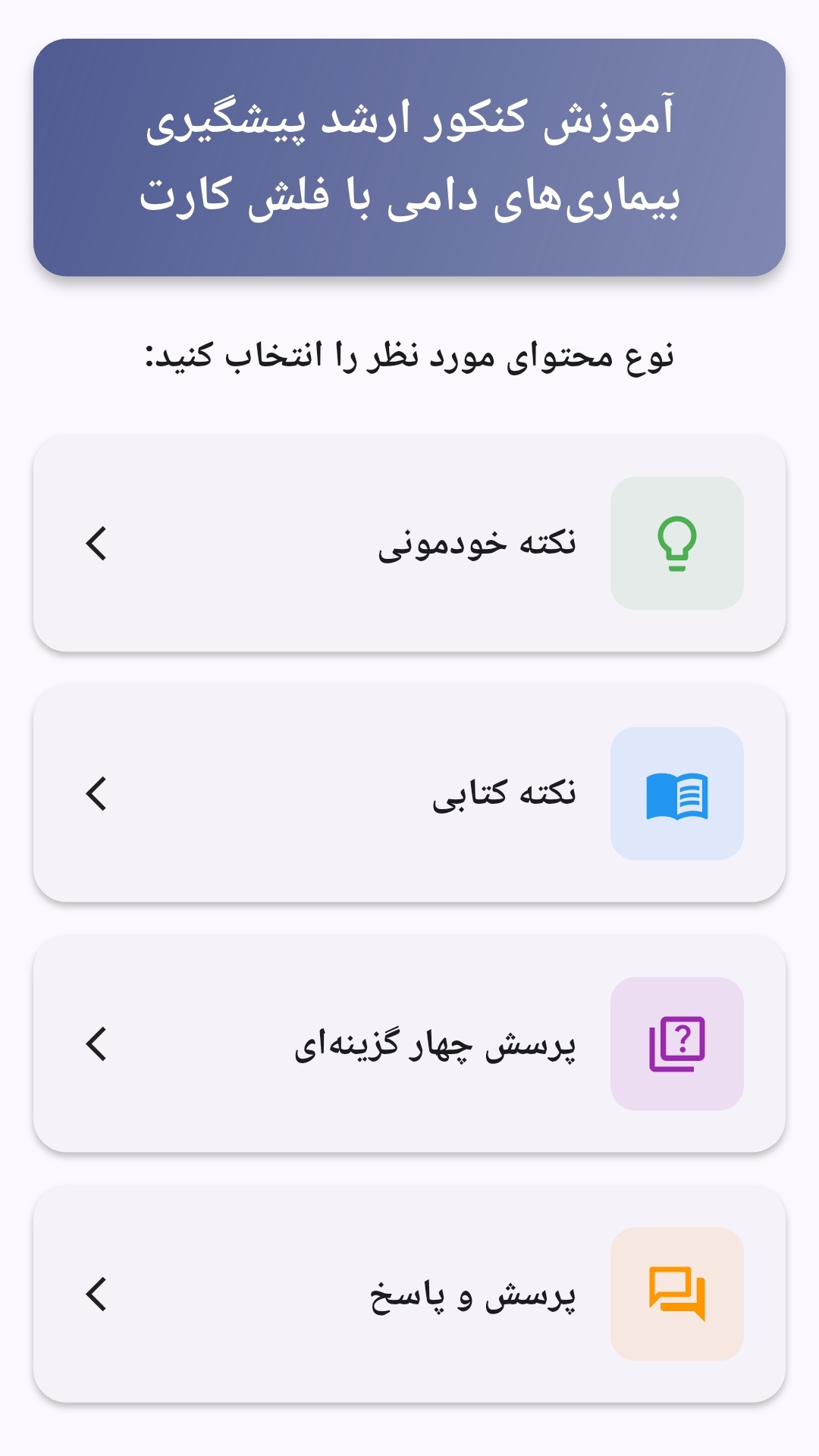
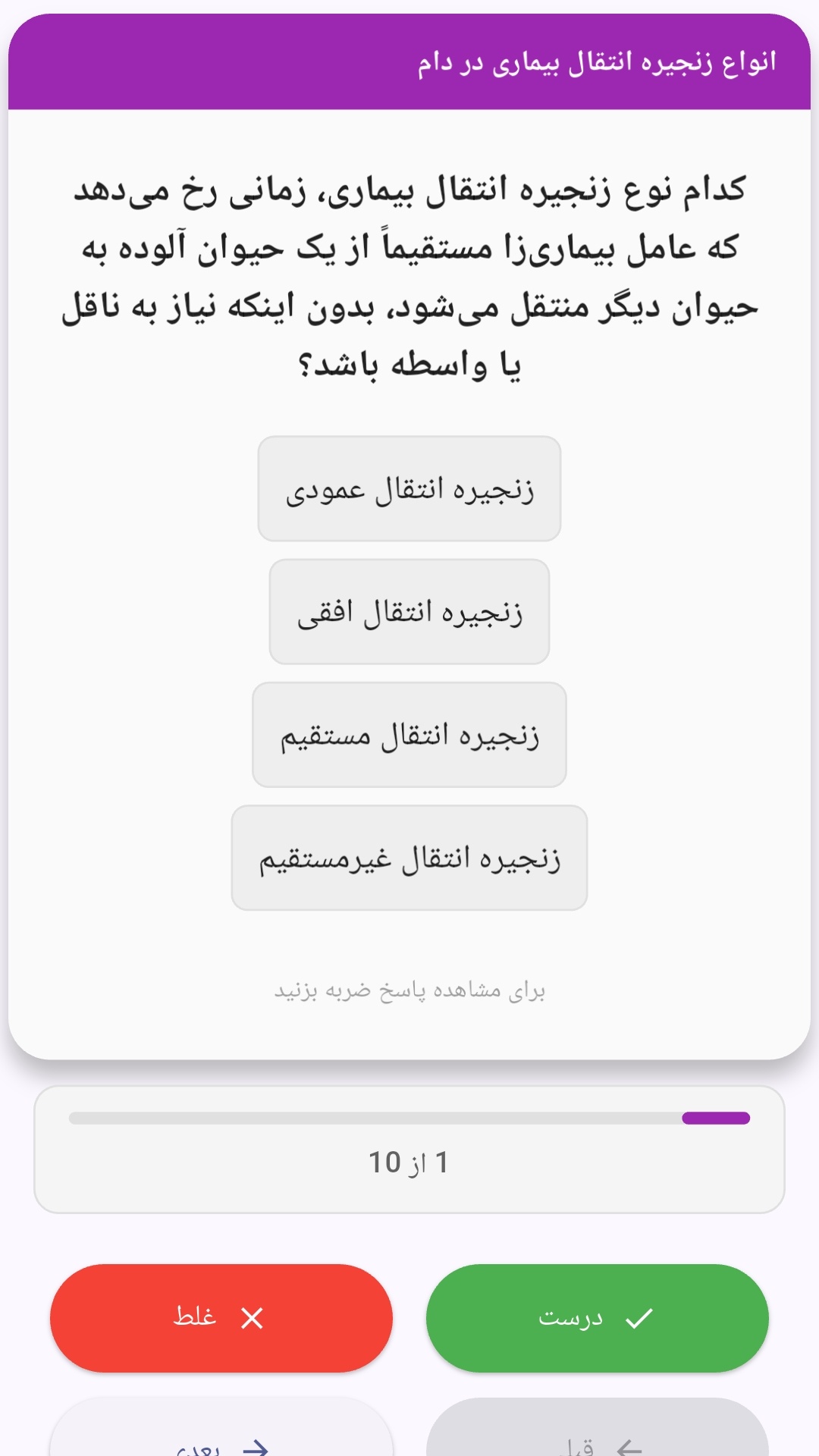
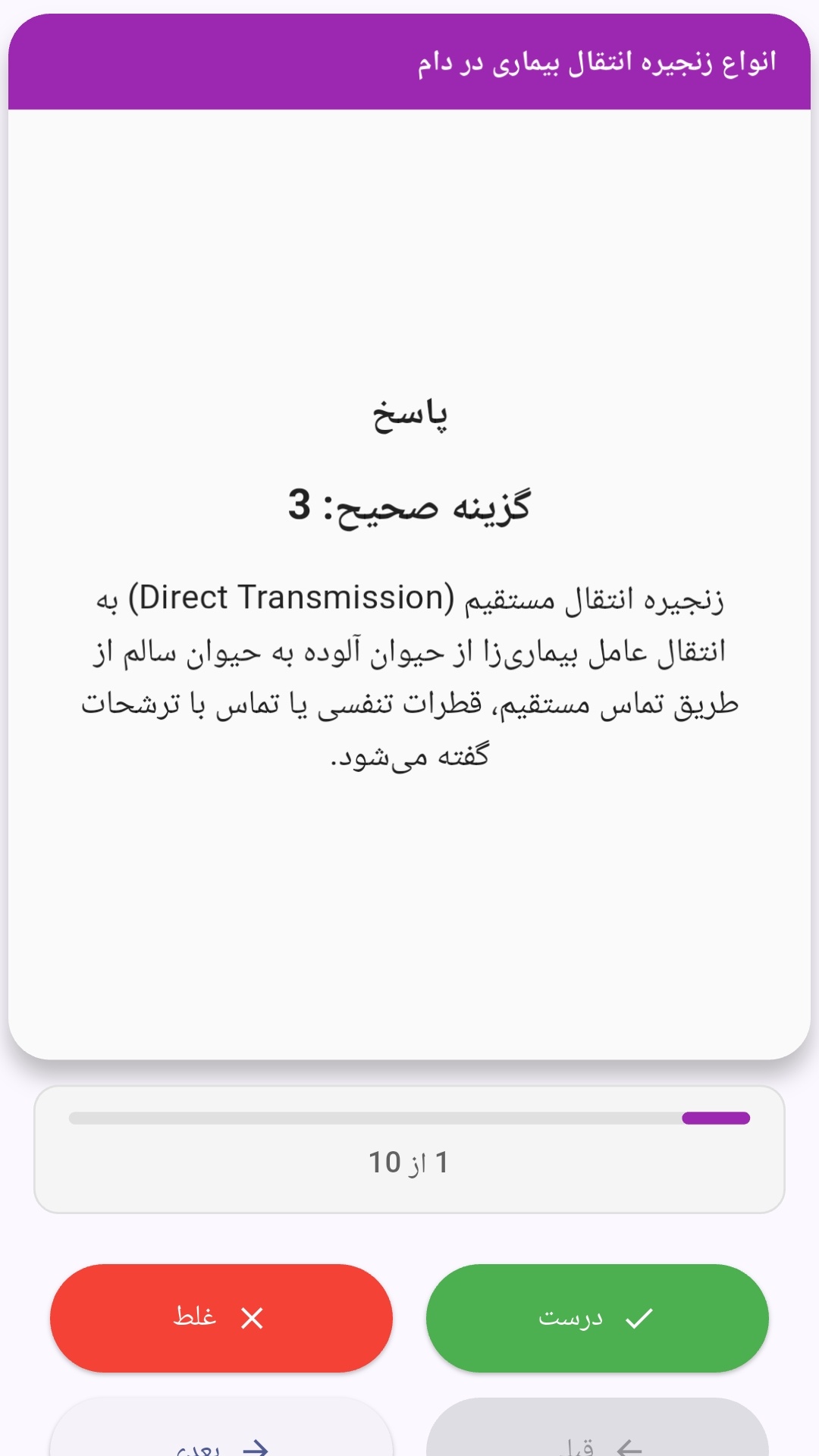
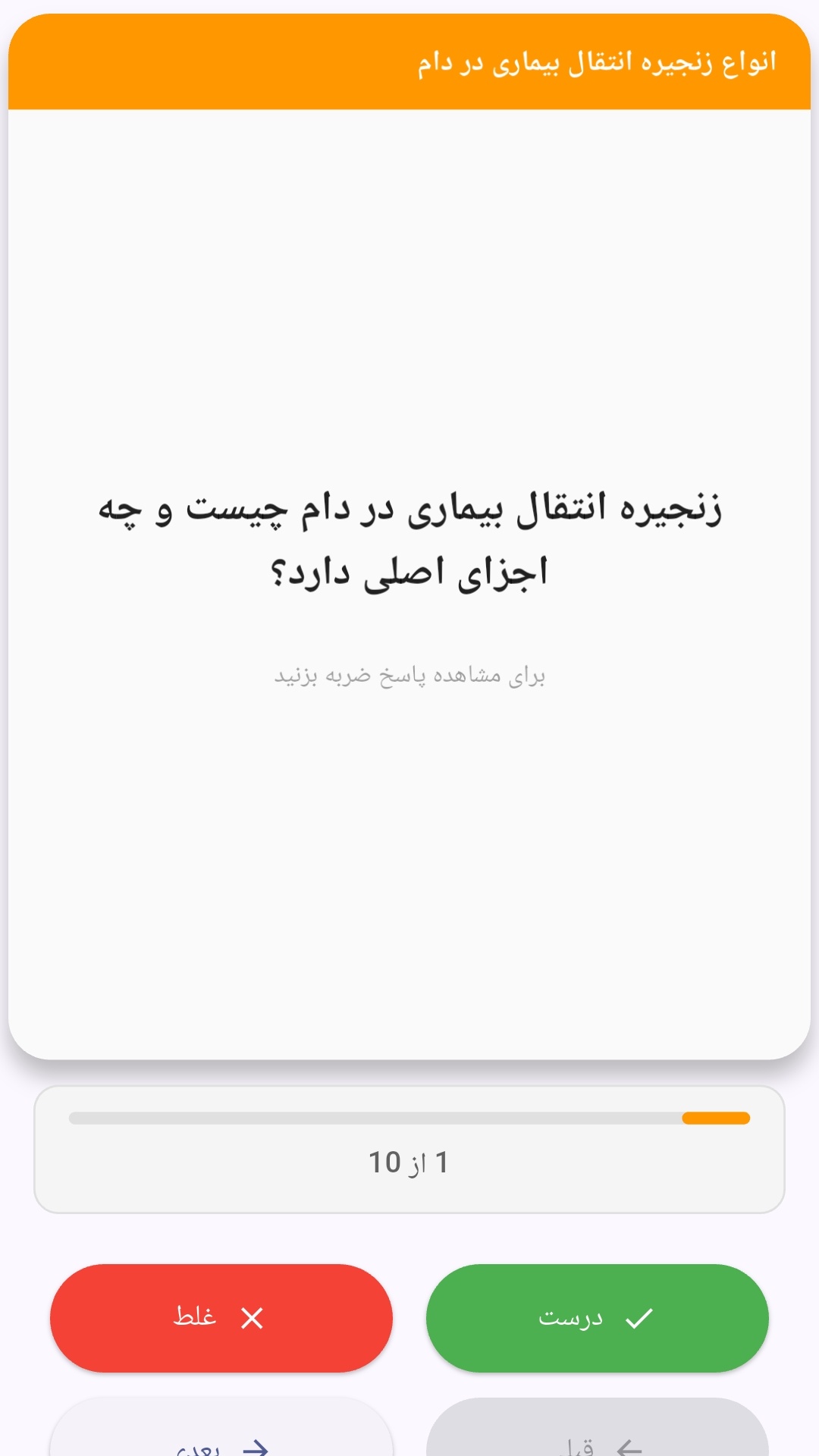
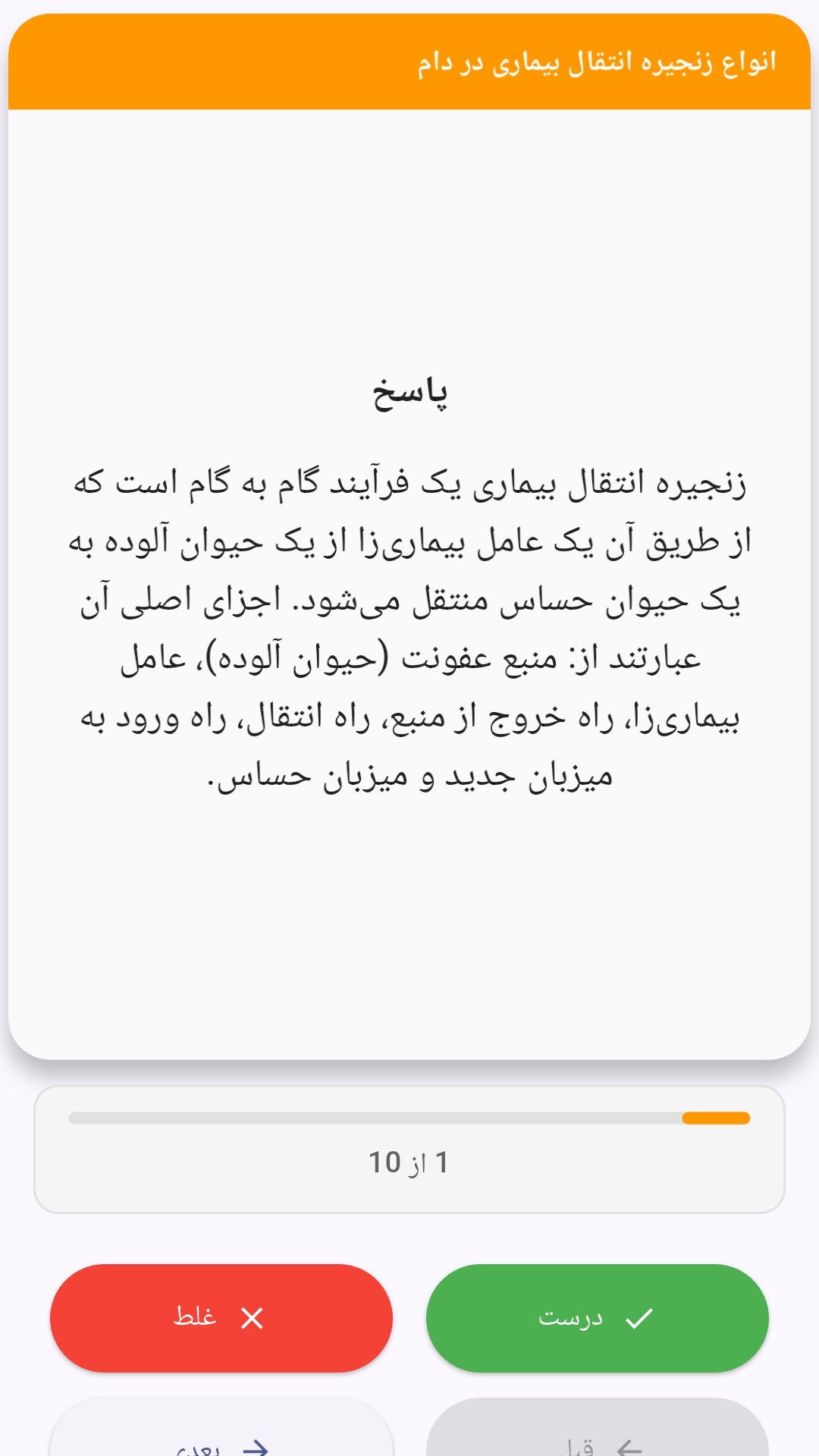
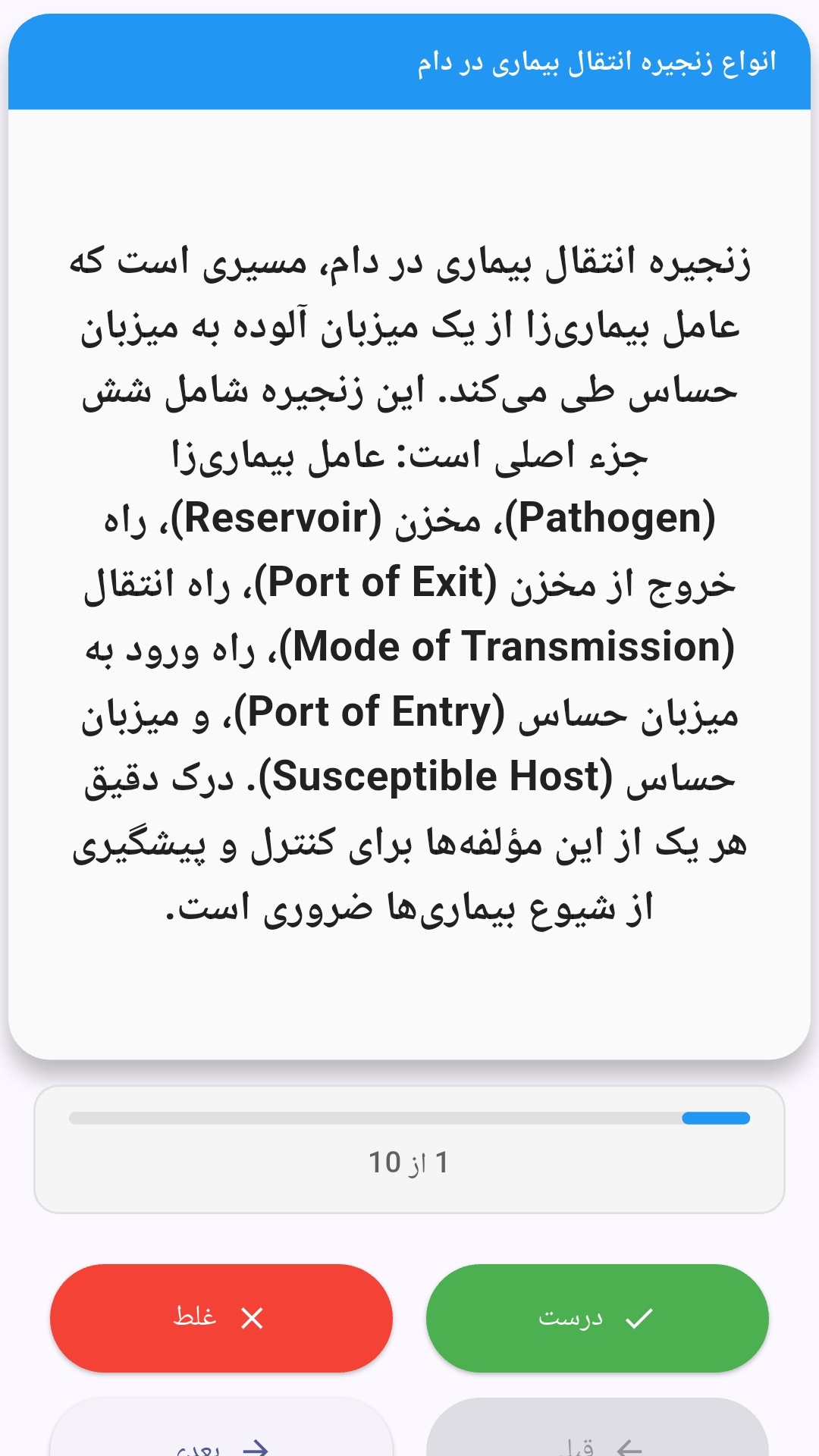
این اپلیکیشن فارسی برای یادگیری و مرور محتوای آموزشی از طریق فلشکارت طراحی شده است. کارتها را یکییکی مرور کنید، پاسخ پرسشها را به یاد بیاورید و نتیجه هر پاسخ را ثبت کنید. محتوای دوره پس از نصب درون برنامه در دسترس است تا برای مطالعه روزمره معمولاً به اتصال مداوم اینترنت نیاز نداشته باشید.
محتوای آموزشی در قالبهای متنوع ارائه میشود تا هم برای یادگیری مفاهیم جدید و هم برای تثبیت آموختهها قابل استفاده باشد.
- رابط کاربری فارسی و راستچین با فونت وزیر.
- تم روشن و تیره مطابق تنظیمات سیستم.
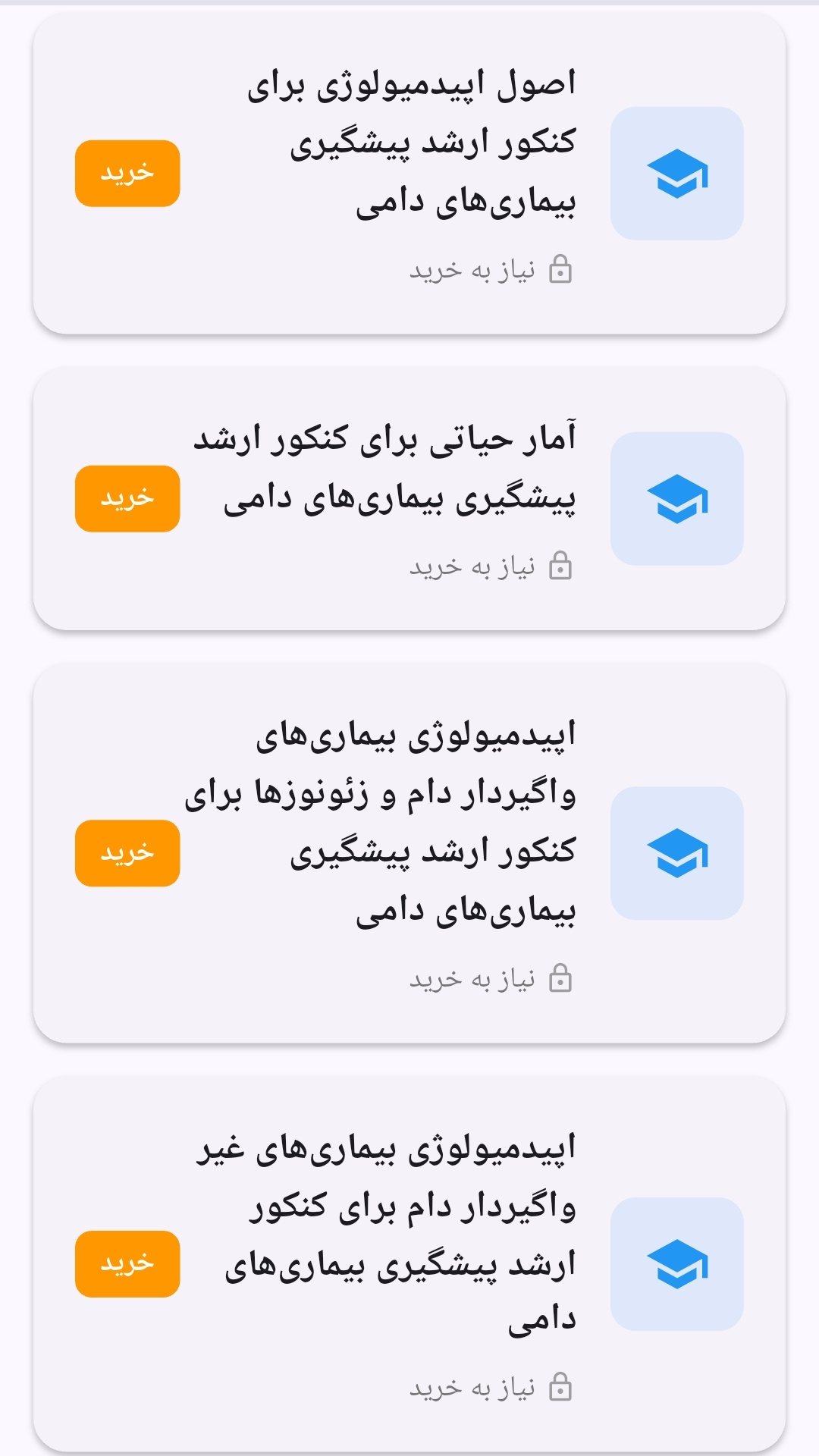
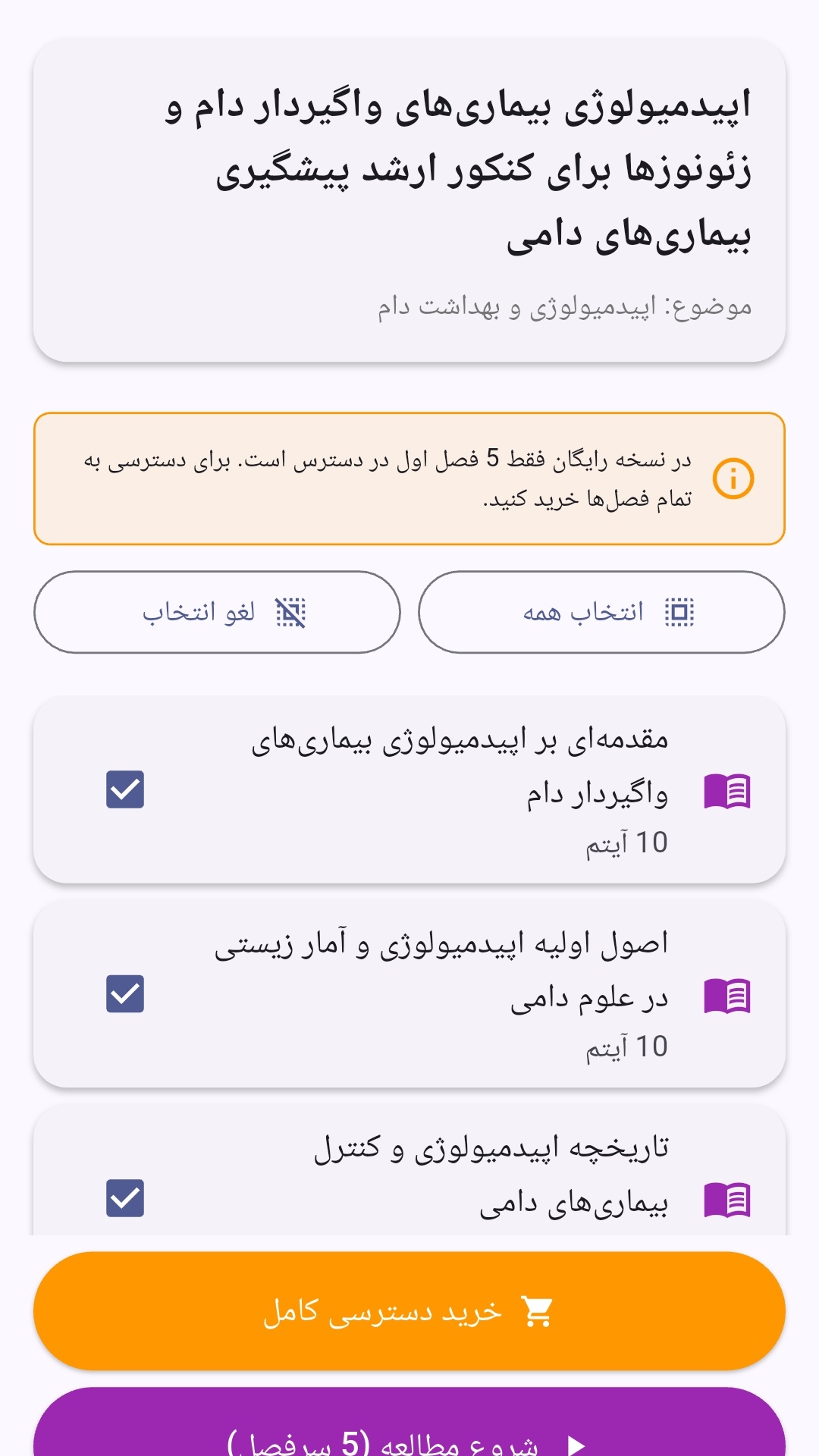
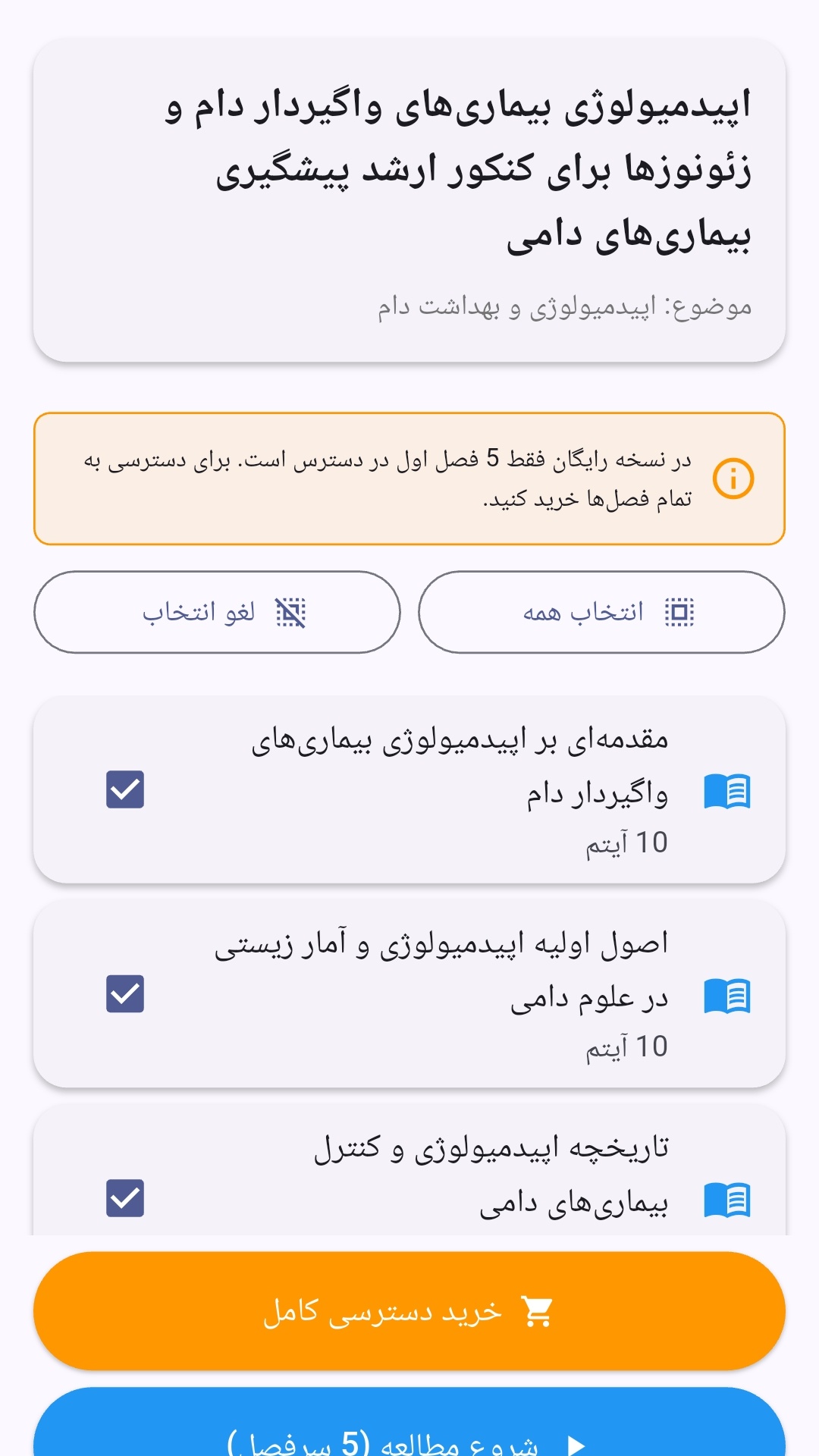
- صفحهبندی ساده برای انتخاب دوره و شروع مرور.
- نمایش تعداد دفعات مرور هر فصل.
- انتخاب چند فصل برای مرور همزمان.
- امکان تمرکز بر فصلهایی که هنوز مرور نشدهاند.
این اپلیکیشن برای دانشآموزان، دانشجویان، داوطلبان آزمونها و علاقهمندان به یادگیری طراحی شده است؛ بهویژه کسانی که میخواهند مطالب آموزشی را در زمانهای کوتاه مرور کنند، دانستههای خود را بسنجند و مطالعه منظمتری داشته باشند.
نظرات
هنوز نظری ثبت نشده است.
وارد شوید تا نظر ثبت کنید.